
<?xml version="1.0" encoding="utf-8"?>
<feed xmlns="http://www.w3.org/2005/Atom" xmlns:media="http://search.yahoo.com/mrss/">
    <title>Sylvain Lafrance - iOS APPS</title>
    <link href="https://myrcbox.com/feed.xml" rel="self" />
    <link href="https://myrcbox.com" />
    <updated>2026-05-09T22:53:41-04:00</updated>
    <author>
        <name>Sylvain Lafrance</name>
    </author>
    <id>https://myrcbox.com</id>

    <entry>
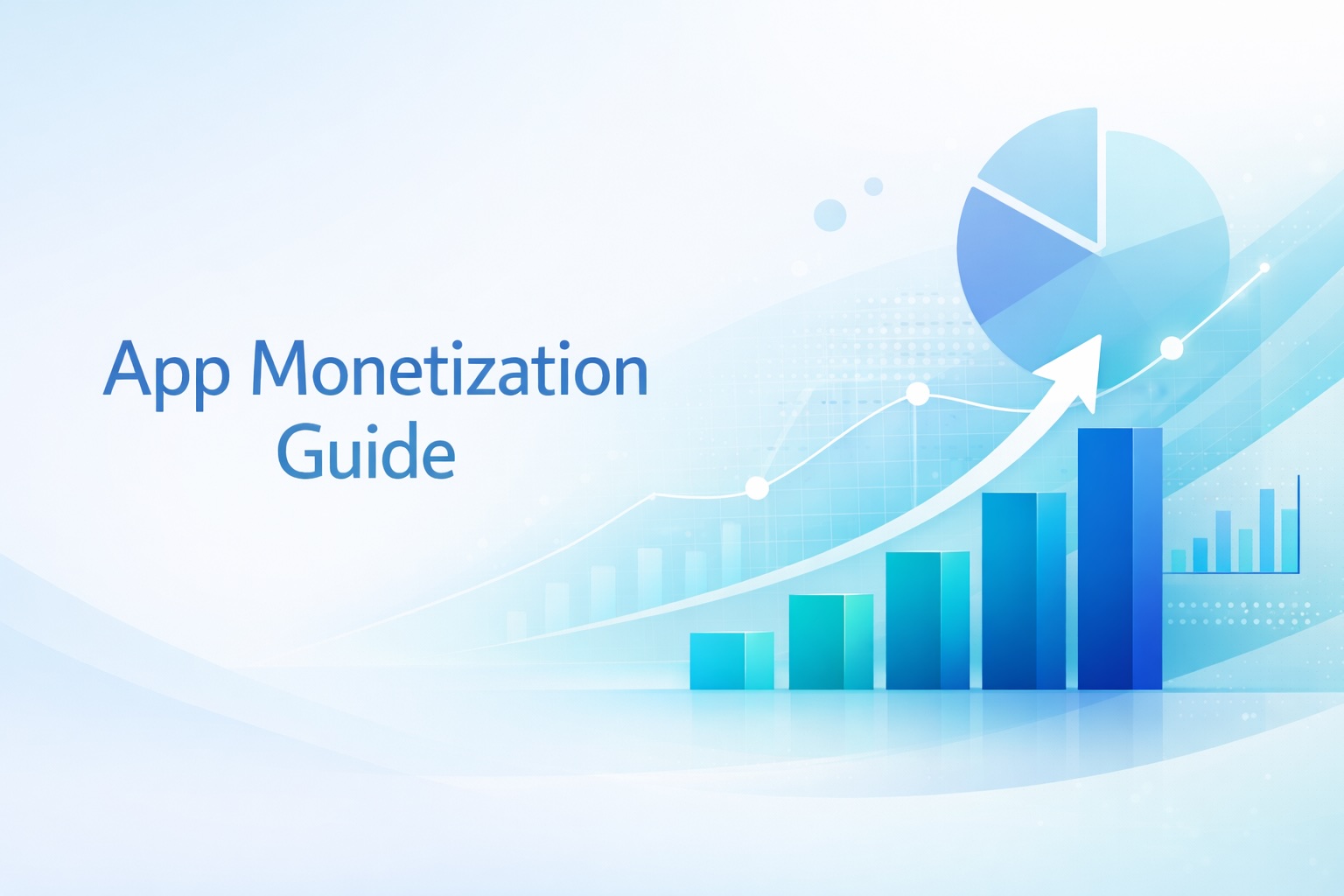
        <title>App Monetization Techniques Explained: A Practical, Data‑Driven Guide for Developers</title>
        <author>
            <name>Sylvain Lafrance</name>
        </author>
        <link href="https://myrcbox.com/app-monetization-techniques-explained-a-practical-data-driven-guide-for-developers/"/>
        <id>https://myrcbox.com/app-monetization-techniques-explained-a-practical-data-driven-guide-for-developers/</id>
        <media:content url="https://myrcbox.com/media/posts/30/App_Monetization_Guide.jpg" medium="image" />
            <category term="MY POSTS"/>

        <updated>2026-04-06T11:06:55-04:00</updated>
            <summary type="html">
                <![CDATA[
                        <img src="https://myrcbox.com/media/posts/30/App_Monetization_Guide.jpg" alt="" />
                    The Pros and Cons of Each Monetization Strategy Monetizing an app is one of the most important — and most confusing — decisions an indie developer has to make. Choose the wrong model and you risk frustrating users or limiting your revenue. Choose the right&hellip;
                ]]>
            </summary>
        <content type="html">
            <![CDATA[
                    <p><img src="https://myrcbox.com/media/posts/30/App_Monetization_Guide.jpg" class="type:primaryImage" alt="" /></p>
                <article>
<h1>The Pros and Cons of Each Monetization Strategy</h1>
<p>Monetizing an app is one of the most important — and most confusing — decisions an indie developer has to make. Choose the wrong model and you risk frustrating users or limiting your revenue. Choose the right one and your app becomes sustainable, profitable, and easier to maintain long‑term.</p>
<p>After building and shipping multiple iOS apps, many developers discover that some monetization approaches work beautifully while others fall flat. This guide breaks down the most common monetization techniques, explains when each one makes sense, and adds real‑world stats and category insights so you can make better decisions.</p>
<h2>1. Free Apps (No Monetization)</h2>
<p>A free app with no ads, no in‑app purchases, and no subscriptions is the simplest model possible.</p>
<h3>Stats</h3>
<ul>
<li>Around <strong>90% of apps on the App Store are free</strong>.</li>
<li>Free apps typically get <strong>5–20× more downloads</strong> than paid apps.</li>
</ul>
<h3>Pros</h3>
<ul>
<li>Zero friction — users download instantly.</li>
<li>Great for showcasing your work.</li>
<li>Builds trust and reputation.</li>
</ul>
<h3>Cons</h3>
<ul>
<li>No direct revenue.</li>
<li>Hard to justify long‑term updates.</li>
<li>Users may undervalue the app.</li>
</ul>
<h3>Best for</h3>
<ul>
<li>Portfolio apps.</li>
<li>Experimental ideas.</li>
<li>Tools meant to support other apps or your brand.</li>
</ul>
<h2>2. Paid Upfront (One‑Time Purchase)</h2>
<p>Users pay once to download the app. This model used to dominate the App Store, but it’s far less common today.</p>
<h3>Stats</h3>
<ul>
<li>Only about <strong>5% of apps</strong> on the App Store are paid upfront.</li>
<li>Paid apps generate <strong>less than 2% of total App Store revenue</strong>.</li>
<li>Conversion rates for paid apps are typically <strong>1–3%</strong>, compared to <strong>20–60%</strong> for free apps with in‑app purchases.</li>
</ul>
<h3>Pros</h3>
<ul>
<li>Simple and transparent pricing.</li>
<li>No ongoing billing logic.</li>
<li>Works well for niche or professional tools.</li>
</ul>
<h3>Cons</h3>
<ul>
<li>Higher barrier to entry — no free trial.</li>
<li>Revenue is front‑loaded.</li>
<li>Users often expect ongoing updates without ongoing payments.</li>
</ul>
<h3>Best for</h3>
<ul>
<li>Specialized utilities.</li>
<li>Apps with stable feature sets.</li>
<li>Tools that don’t require server or API costs.</li>
</ul>
<h2>3. In‑App Purchases (IAP)</h2>
<p>In‑app purchases let users unlock features, content, or upgrades inside the app.</p>
<h3>Stats</h3>
<ul>
<li>IAPs account for roughly <strong>48% of App Store revenue</strong>.</li>
<li>“Free + Pro unlock” models often see <strong>3–10% conversion</strong> from free to paid.</li>
<li>Non‑consumable IAPs are the most common monetization method among indie developers.</li>
</ul>
<h3>Types of IAP</h3>
<ul>
<li><strong>Non‑consumable:</strong> One‑time unlock (e.g., “Pro version”).</li>
<li><strong>Consumable:</strong> Credits, tokens, or items that can be purchased repeatedly.</li>
<li><strong>Non‑renewing subscription:</strong> Time‑limited access without auto‑renew.</li>
</ul>
<h3>Pros</h3>
<ul>
<li>Users can try the app before paying.</li>
<li>Flexible pricing and packaging.</li>
<li>Great for freemium models.</li>
</ul>
<h3>Cons</h3>
<ul>
<li>Requires thoughtful UX and clear messaging.</li>
<li>Can feel manipulative if overused.</li>
<li>More complex to maintain than a simple paid app.</li>
</ul>
<h3>Best for</h3>
<ul>
<li>Productivity apps with “Pro” features.</li>
<li>Creative tools (filters, export options, extra content).</li>
<li>Utilities with optional advanced features.</li>
</ul>
<h2>4. Subscriptions</h2>
<p>Subscriptions are the most powerful — and most controversial — monetization model.</p>
<h3>Stats</h3>
<ul>
<li>Subscriptions generate <strong>over 60% of App Store revenue</strong>.</li>
<li>Subscription apps often earn <strong>2–5× more per user</strong> than one‑time purchase apps.</li>
<li>Average monthly churn for consumer subscription apps is around <strong>4–8%</strong>, depending on category.</li>
<li>Subscription apps have grown by more than <strong>900%</strong> over the last several years.</li>
</ul>
<h3>Pros</h3>
<ul>
<li>Recurring revenue and more predictable cash flow.</li>
<li>Encourages continuous updates and improvements.</li>
<li>Apple heavily promotes subscription‑based apps.</li>
</ul>
<h3>Cons</h3>
<ul>
<li>Users are increasingly subscription‑fatigued.</li>
<li>Requires ongoing value delivery.</li>
<li>Higher support and reliability expectations.</li>
</ul>
<h3>Best for</h3>
<ul>
<li>Apps with ongoing content or features.</li>
<li>Cloud‑based or server‑dependent apps.</li>
<li>Apps that evolve frequently and justify recurring payment.</li>
</ul>
<h2>5. Ads</h2>
<p>Ads can be effective — but only in specific situations.</p>
<h3>Stats</h3>
<ul>
<li>Ad‑supported apps generate roughly <strong>15% of App Store revenue</strong>.</li>
<li>Average revenue per user (ARPU) for ads is often just <strong>$0.02–$0.10 per session</strong>.</li>
<li>Meaningful ad revenue usually requires <strong>hundreds of thousands of monthly active users</strong>.</li>
</ul>
<h3>Pros</h3>
<ul>
<li>Users don’t pay directly.</li>
<li>Works well for high‑traffic apps.</li>
<li>Relatively easy to integrate with frameworks like AdMob.</li>
</ul>
<h3>Cons</h3>
<ul>
<li>Requires a large user base to be worthwhile.</li>
<li>Can hurt the user experience if overdone.</li>
<li>Revenue per user is low compared to IAP or subscriptions.</li>
</ul>
<h3>Best for</h3>
<ul>
<li>Games.</li>
<li>Entertainment apps.</li>
<li>Apps with frequent daily usage and short sessions.</li>
</ul>
<h2>6. Tip Jars / Donations</h2>
<p>Tip jars are a simple, transparent way to let users support your work.</p>
<h3>Stats</h3>
<ul>
<li>Tip jars often convert at <strong>0.5–2%</strong>, depending on audience loyalty.</li>
<li>Average tip amounts are typically in the <strong>$1–$5</strong> range.</li>
<li>Apps with strong personal branding can see <strong>3–5× higher</strong> donation rates.</li>
</ul>
<h3>Pros</h3>
<ul>
<li>Zero pressure — the app can remain fully usable for free.</li>
<li>Users appreciate the honesty and optional support.</li>
<li>Easy to implement as a simple IAP.</li>
</ul>
<h3>Cons</h3>
<ul>
<li>Revenue is unpredictable.</li>
<li>Most users will never donate.</li>
</ul>
<h3>Best for</h3>
<ul>
<li>Free apps.</li>
<li>Indie utilities and passion projects.</li>
<li>Apps with a loyal, engaged user base.</li>
</ul>
<h2>7. Hybrid Models</h2>
<p>Many successful apps combine multiple techniques:</p>
<ul>
<li>Free + IAP.</li>
<li>Free + subscription.</li>
<li>Free + ads + “remove ads” IAP.</li>
<li>Subscription + one‑time lifetime unlock.</li>
</ul>
<h3>Stats</h3>
<ul>
<li>Hybrid monetization can increase revenue by roughly <strong>20–40%</strong> on average.</li>
<li>Apps offering both subscription and lifetime unlock often see higher conversion and lower churn.</li>
</ul>
<h2>Which App Categories Monetize Best</h2>
<p>Not all monetization models work equally well across app categories. Some categories thrive with subscriptions, others with one‑time purchases or IAP. The table below summarizes which models tend to fit which types of apps.</p>
<h3>Visual Comparison: Best Monetization Models by App Category</h3>
<table>
<thead>
<tr>
<th>App Category</th>
<th>Best Monetization Model(s)</th>
<th>Why It Works</th>
</tr>
</thead>
<tbody>
<tr>
<td><strong>Productivity</strong></td>
<td>Subscription, IAP</td>
<td>Users rely on daily value and expect ongoing updates, sync, and reliability.</td>
</tr>
<tr>
<td><strong>Utilities</strong></td>
<td>One‑time purchase, IAP</td>
<td>Clear value, simple feature sets, often no need for ongoing content.</td>
</tr>
<tr>
<td><strong>Creative / Drawing</strong></td>
<td>IAP, One‑time purchase</td>
<td>Users pay to unlock tools, brushes, export options, or extra content.</td>
</tr>
<tr>
<td><strong>Network Tools</strong></td>
<td>One‑time purchase, Subscription</td>
<td>Power users value reliability; some features require ongoing maintenance or infrastructure.</td>
</tr>
<tr>
<td><strong>Games / Simulations</strong></td>
<td>Ads, IAP</td>
<td>High usage frequency; optional upgrades and cosmetic purchases work well.</td>
</tr>
<tr>
<td><strong>AI Apps</strong></td>
<td>Subscription, Consumable IAP (credits)</td>
<td>AI costs scale with usage; subscriptions or credits align revenue with API costs.</td>
</tr>
<tr>
<td><strong>Journaling / Habit Tracking</strong></td>
<td>Subscription, IAP</td>
<td>Long‑term engagement, cloud sync, and ongoing improvements justify recurring payment.</td>
</tr>
<tr>
<td><strong>Finance / Budgeting</strong></td>
<td>Subscription</td>
<td>Users expect security, sync, and continuous updates and maintenance.</td>
</tr>
<tr>
<td><strong>Lifestyle / Personal Tools</strong></td>
<td>IAP, Tip Jar</td>
<td>Users appreciate optional upgrades and customization without heavy commitment.</td>
</tr>
<tr>
<td><strong>Minimalist Utilities</strong></td>
<td>Tip Jar, One‑time purchase</td>
<td>Simple apps with loyal users often perform well with optional support or small one‑time fees.</td>
</tr>
</tbody>
</table>
<h3>Category‑by‑Category Notes</h3>
<h4>Productivity Apps</h4>
<p>Best with subscriptions or IAP. Users rely on these apps daily and are willing to pay for reliability, sync, and advanced features.</p>
<h4>Utilities</h4>
<p>Often work well as one‑time purchases or with a single “Pro” unlock. Users want clear, immediate value.</p>
<h4>Creative / Drawing</h4>
<p>Great candidates for IAP packs (brushes, filters, templates) or a one‑time Pro unlock.</p>
<h4>Network Tools</h4>
<p>Power users are willing to pay once, but advanced diagnostics or cloud history can justify subscriptions.</p>
<h4>Games / Simulations</h4>
<p>Ads plus optional IAP (cosmetics, extra levels, boosts) is a common and effective pattern.</p>
<h4>AI Apps</h4>
<p>Because AI APIs cost money per request, subscriptions or credit‑based IAP are the most sustainable options.</p>
<h4>Journaling / Habit Tracking</h4>
<p>These apps live on users’ phones for years; subscriptions or Pro tiers with sync and backups fit well.</p>
<h4>Finance / Budgeting</h4>
<p>Users expect security, reliability, and ongoing updates — subscription is the norm here.</p>
<h4>Lifestyle / Personal Tools</h4>
<p>Optional IAP and tip jars work well when the app is delightful but not mission‑critical.</p>
<h4>Minimalist Utilities</h4>
<p>Simple tools can succeed with a small one‑time fee or an optional tip jar for users who really love them.</p>
<h2>How to Choose the Right Monetization Model</h2>
<p>Here’s a quick framework to decide:</p>
<ul>
<li><strong>Choose a subscription</strong> if your app provides ongoing value, you plan to update it regularly, or you have server/API costs.</li>
<li><strong>Choose IAP</strong> if your app has a clear “Pro” tier and you want to keep the core experience free.</li>
<li><strong>Choose paid upfront</strong> if your app is niche, clearly valuable, and simple to maintain.</li>
<li><strong>Choose ads</strong> if your app has high traffic and monetization isn’t the primary goal.</li>
<li><strong>Choose tip jars</strong> if your app is free and you have (or want to build) a loyal audience.</li>
</ul>
<h2>Final Thoughts</h2>
<p>There’s no universal “best” monetization model — only the one that fits your app, your audience, and your long‑term goals. The most important thing is to build something genuinely useful, be transparent about pricing, and choose a model that makes your app sustainable to maintain and improve over time.</p>
<p> </p>
</article>
            ]]>
        </content>
    </entry>
    <entry>
        <title>App Store Connect &amp; ASO Reference</title>
        <author>
            <name>Sylvain Lafrance</name>
        </author>
        <link href="https://myrcbox.com/app-store-connect-and-aso-reference/"/>
        <id>https://myrcbox.com/app-store-connect-and-aso-reference/</id>
        <media:content url="https://myrcbox.com/media/posts/28/appstore_aso.jpg" medium="image" />
            <category term="MY POSTS"/>

        <updated>2026-04-01T15:39:37-04:00</updated>
            <summary type="html">
                <![CDATA[
                        <img src="https://myrcbox.com/media/posts/28/appstore_aso.jpg" alt="" />
                    Field limits, screenshot specs, ASO rules, and indie dev tips — everything a solo iOS developer needs to ship and rank on the App Store. Field limits, screenshot specs, ASO rules, and indie dev tips — everything a solo iOS developer needs to ship and&hellip;
                ]]>
            </summary>
        <content type="html">
            <![CDATA[
                    <p><img src="https://myrcbox.com/media/posts/28/appstore_aso.jpg" class="type:primaryImage" alt="" /></p>
                <header>
<h2>Field limits, screenshot specs, ASO rules, and indie dev tips — everything a solo iOS developer needs to ship and rank on the App Store.</h2>
<p> </p>
<p>Field limits, screenshot specs, ASO rules, and indie dev tips — everything a solo iOS developer needs to ship and rank on the App Store.</p>
</header><nav>
<ul>
<li><a href="#metadata">Metadata</a></li>
<li><a href="#screenshots">Screenshots</a></li>
<li><a href="#aso">ASO Rules</a></li>
<li><a href="#review">Review</a></li>
<li><a href="#release">Release</a></li>
<li><a href="#pricing">Pricing</a></li>
<li><a href="#checklist">Checklist</a></li>
<li><a href="#tips">Tips</a></li>
</ul>
<p> </p>
</nav><main><!-- ── METADATA ── -->
<section id="metadata">
<h2>1-Metadata field limits</h2>
<table class="ref-table">
<thead>
<tr>
<th>Field</th>
<th>Limit</th>
<th>Notes</th>
</tr>
</thead>
<tbody>
<tr>
<td class="field-name">App Name</td>
<td class="num">30 chars</td>
<td class="field-note">Most weight for ranking. Include primary keyword if natural.</td>
</tr>
<tr>
<td class="field-name">Subtitle</td>
<td class="num">30 chars</td>
<td class="field-note">Second strongest ranking signal. Don't repeat app name keywords.</td>
</tr>
<tr>
<td class="field-name">Keywords field</td>
<td class="num">100 chars</td>
<td class="field-note">Comma-separated, no spaces after commas. No repeating words already in name/subtitle.</td>
</tr>
<tr>
<td class="field-name">Description</td>
<td class="num">4,000 chars</td>
<td class="field-note">Does NOT affect search ranking. Write for human conversion, not keywords.</td>
</tr>
<tr>
<td class="field-name">Promotional Text</td>
<td class="num">170 chars</td>
<td class="field-note">Appears above description. Updatable without a new app version. Use for time-sensitive messaging.</td>
</tr>
<tr>
<td class="field-name">What's New</td>
<td class="num">4,000 chars</td>
<td class="field-note">Shown on update page. Keep it friendly and honest.</td>
</tr>
<tr>
<td class="field-name">Support URL</td>
<td class="num">required</td>
<td class="field-note">Must be a working URL. Rejection risk if broken.</td>
</tr>
<tr>
<td class="field-name">Privacy Policy URL</td>
<td class="num">required</td>
<td class="field-note">Required for all apps since 2018. Must describe data use.</td>
</tr>
</tbody>
</table>
<div class="note"><strong>Tip:</strong> Promotional Text is the only metadata field you can update without submitting a new binary. Use it for sales, seasonal messaging, or A/B testing copy.</div>
</section>
<!-- ── SCREENSHOTS ── -->
<section id="screenshots">
<p class="section-label"> </p>
<h2>2-Screenshot &amp; preview specs</h2>
<h3>Required device sizes (iPhone)</h3>
<div class="card-grid">
<div class="card">
<p class="card-title">6.9" (iPhone 16 Pro Max)</p>
<ul>
<li class="card-dim">1320 × 2868 px</li>
<li class="card-note">Required since 2024. Replaces 6.7" as primary.</li>
</ul>
</div>
<div class="card">
<p class="card-title">6.5" (iPhone 14 Plus / 13 Pro Max)</p>
<ul>
<li class="card-dim">1242 × 2688 px</li>
<li class="card-note">Still widely used as fallback display size.</li>
</ul>
</div>
<div class="card">
<p class="card-title">5.5" (iPhone 8 Plus)</p>
<ul>
<li class="card-dim">1242 × 2208 px</li>
<li class="card-note">Legacy required size. Used as fallback for 4.7" and smaller.</li>
</ul>
</div>
</div>
<h3>Required device sizes (iPad)</h3>
<div class="card-grid">
<div class="card">
<p class="card-title">iPad Pro 13" (M4)</p>
<ul>
<li class="card-dim">2064 × 2752 px</li>
<li class="card-note">Required if app supports iPad.</li>
</ul>
</div>
<div class="card">
<p class="card-title">iPad Pro 12.9" (2nd gen)</p>
<ul>
<li class="card-dim">2048 × 2732 px</li>
<li class="card-note">Legacy required size.</li>
</ul>
</div>
</div>
<h3>Rules &amp; limits</h3>
<table class="ref-table">
<tbody>
<tr>
<td class="field-name">Max screenshots per locale</td>
<td class="num">10</td>
<td class="field-note">First 3 visible without tapping. Those are your most important.</td>
</tr>
<tr>
<td class="field-name">Min screenshots</td>
<td class="num">1</td>
<td class="field-note">At least 1 required per supported device size.</td>
</tr>
<tr>
<td class="field-name">Format</td>
<td>JPEG or PNG</td>
<td class="field-note">No alpha channel for JPEG. 72 dpi minimum.</td>
</tr>
<tr>
<td class="field-name">App Preview (video)</td>
<td class="num">up to 3</td>
<td class="field-note">15–30 seconds. Must show actual app UI, not marketing animation.</td>
</tr>
<tr>
<td class="field-name">App Preview format</td>
<td>M4V, MP4, MOV</td>
<td class="field-note">Max 500 MB. Auto-plays muted in App Store.</td>
</tr>
</tbody>
</table>
<div class="note"><strong>Note:</strong> Screenshots don't have to show an actual device frame — frameless or custom-designed marketing images are allowed and often perform better.</div>
</section>
<!-- ── ASO ── -->
<section id="aso">
<p class="section-label"> </p>
<h2>3-ASO ranking rules</h2>
<h3>What Apple indexes for search</h3>
<table class="ref-table">
<thead>
<tr>
<th>Field</th>
<th>Indexed?</th>
<th>Weight</th>
</tr>
</thead>
<tbody>
<tr>
<td class="field-name">App Name</td>
<td class="num">✓</td>
<td class="field-note">Highest</td>
</tr>
<tr>
<td class="field-name">Subtitle</td>
<td class="num">✓</td>
<td class="field-note">High</td>
</tr>
<tr>
<td class="field-name">Keywords field</td>
<td class="num">✓</td>
<td class="field-note">Medium</td>
</tr>
<tr>
<td class="field-name">In-App Purchase names</td>
<td class="num">✓</td>
<td class="field-note">Medium</td>
</tr>
<tr>
<td class="field-name">Developer name</td>
<td class="num">✓</td>
<td class="field-note">Low</td>
</tr>
<tr>
<td class="field-name">Description</td>
<td class="num">✗</td>
<td class="field-note">Not indexed by Apple search</td>
</tr>
<tr>
<td class="field-name">Promotional Text</td>
<td class="num">✗</td>
<td class="field-note">Not indexed</td>
</tr>
</tbody>
</table>
<h3>Keyword best practices</h3>
<div class="pill-list"><span class="pill do">Use singular or plural, not both</span> <span class="pill do">Separate with commas, no spaces</span> <span class="pill do">Include competitor-adjacent terms</span> <span class="pill do">Use all 100 characters</span> <span class="pill dont">Don't repeat words from name/subtitle</span> <span class="pill dont">Don't include your app name</span> <span class="pill dont">Don't use spaces after commas</span> <span class="pill dont">Don't use competitor brand names</span></div>
<h3>Ranking factors beyond keywords</h3>
<table class="ref-table">
<tbody>
<tr>
<td class="field-name">Ratings &amp; reviews volume</td>
<td class="field-note">High impact. Prompt at the right moment with <code>SKStoreReviewController</code>.</td>
</tr>
<tr>
<td class="field-name">Average star rating</td>
<td class="field-note">High impact. Shown prominently in search results.</td>
</tr>
<tr>
<td class="field-name">Download velocity</td>
<td class="field-note">A burst of installs signals popularity to Apple's algorithm.</td>
</tr>
<tr>
<td class="field-name">Conversion rate</td>
<td class="field-note">Impressions → downloads. Mainly driven by icon, screenshots, and name.</td>
</tr>
<tr>
<td class="field-name">Retention / crashes</td>
<td class="field-note">Stable, well-used apps rank better over time.</td>
</tr>
<tr>
<td class="field-name">Revenue</td>
<td class="field-note">Apple reportedly favors monetizing apps.</td>
</tr>
</tbody>
</table>
</section>
<!-- ── REVIEW ── -->
<section id="review">
<p class="section-label"> </p>
<h2>4-Review process</h2>
<table class="ref-table">
<tbody>
<tr>
<td class="field-name">Average review time</td>
<td class="num">24–48 hrs</td>
<td class="field-note">Most submissions reviewed within 1 business day as of 2026.</td>
</tr>
<tr>
<td class="field-name">Expedited review</td>
<td>Available</td>
<td class="field-note">Request via App Store Connect for critical bug fixes or time-sensitive launches. Not guaranteed.</td>
</tr>
<tr>
<td class="field-name">Max binary size (OTA)</td>
<td class="num">4 GB</td>
<td class="field-note">Over-the-air download limit is 200 MB (user prompt above that).</td>
</tr>
<tr>
<td class="field-name">OTA prompt threshold</td>
<td class="num">200 MB</td>
<td class="field-note">Users on cellular are prompted before downloading above this size.</td>
</tr>
</tbody>
</table>
<h3>Common rejection reasons</h3>
<div class="pill-list"><span class="pill dont">Broken links (support URL, privacy policy)</span> <span class="pill dont">Demo account not provided for login-required apps</span> <span class="pill dont">Misleading screenshots or description</span> <span class="pill dont">Missing privacy policy for data collection</span> <span class="pill dont">App crashes on launch</span> <span class="pill dont">Placeholder content</span> <span class="pill dont">Keyword stuffing in name or subtitle</span></div>
</section>
<!-- ── RELEASE ── -->
<section id="release">
<p class="section-label"> </p>
<h2>5-Release options</h2>
<h3>Phased release schedule</h3>
<div class="phase-bar">
<div class="phase-item"><span class="phase-pct">1% </span><span class="phase-day">Day 1–2</span></div>
<div class="phase-item"><span class="phase-pct">2% </span><span class="phase-day">Day 3–4</span></div>
<div class="phase-item"><span class="phase-pct">5% </span><span class="phase-day">Day 5–6</span></div>
<div class="phase-item"><span class="phase-pct">10% </span><span class="phase-day">Day 7–8</span></div>
<div class="phase-item"><span class="phase-pct">20% </span><span class="phase-day">Day 9–10</span></div>
<div class="phase-item"><span class="phase-pct">50% </span><span class="phase-day">Day 11–12</span></div>
<div class="phase-item"><span class="phase-pct">100% </span><span class="phase-day">Day 13–14</span></div>
</div>
<div> </div>
<div class="note"><strong>Tip:</strong> You can pause or stop phased release at any time in App Store Connect. Useful if you discover a critical bug after launch.</div>
<h3>Release timing options</h3>
<table class="ref-table">
<tbody>
<tr>
<td class="field-name">Manually release</td>
<td class="field-note">You trigger the release after approval. Gives you control over timing (launch events, social posts).</td>
</tr>
<tr>
<td class="field-name">Automatically release</td>
<td class="field-note">Goes live immediately upon approval. Fastest option.</td>
</tr>
<tr>
<td class="field-name">Schedule a date</td>
<td class="field-note">Set a specific date and time (UTC). Must be approved before the date.</td>
</tr>
</tbody>
</table>
</section>
<!-- ── PRICING ── -->
<section id="pricing">
<p class="section-label"> </p>
<h2>6-Pricing tiers (USD reference)</h2>
<table class="ref-table">
<thead>
<tr>
<th>Tier</th>
<th>USD Price</th>
<th>Notes</th>
</tr>
</thead>
<tbody>
<tr>
<td class="field-name">Free</td>
<td class="num">$0</td>
<td class="field-note">Highest install volume. Monetize via IAP or subscription.</td>
</tr>
<tr>
<td class="field-name">Tier 1</td>
<td class="num">$0.99</td>
<td class="field-note">Lowest paid tier.</td>
</tr>
<tr>
<td class="field-name">Tier 2</td>
<td class="num">$1.99</td>
<td> </td>
</tr>
<tr>
<td class="field-name">Tier 3</td>
<td class="num">$2.99</td>
<td> </td>
</tr>
<tr>
<td class="field-name">Tier 4</td>
<td class="num">$3.99</td>
<td> </td>
</tr>
<tr>
<td class="field-name">Tier 5</td>
<td class="num">$4.99</td>
<td class="field-note">Sweet spot for utility apps. Used by NetProbe Pro.</td>
</tr>
<tr>
<td class="field-name">Tier 10</td>
<td class="num">$9.99</td>
<td> </td>
</tr>
<tr>
<td class="field-name">Custom tiers</td>
<td>up to $999.99</td>
<td class="field-note">Apple offers 900+ price points. Set per territory.</td>
</tr>
</tbody>
</table>
<div class="note"><strong>Note:</strong> Apple takes 30% commission (15% for Small Business Program — developers earning under $1M/year). Prices are automatically converted per territory based on your base currency.</div>
</section>
<!-- ── CHECKLIST ── -->
<section id="checklist">
<p class="section-label"> </p>
<h2>7-Pre-submission checklist</h2>
<ul class="checklist">
<li>App Name uses primary keyword naturally (≤ 30 chars) <span class="check-note">Don't keyword-stuff — Apple may reject or modify it.</span></li>
<li>Subtitle uses secondary keywords not repeated in name (≤ 30 chars)</li>
<li>Keywords field uses all 100 characters, no spaces after commas <span class="check-note">No words already present in name or subtitle.</span></li>
<li>Description first paragraph hooks the user (most visible before "more") <span class="check-note">About 255 chars shown before the fold on most devices.</span></li>
<li>Screenshots provided for all required device sizes <span class="check-note">At minimum: 6.9", 6.5", 5.5". Add iPad sizes if applicable.</span></li>
<li>First 3 screenshots communicate core value instantly <span class="check-note">These show in search results without tapping.</span></li>
<li>Support URL is live and accessible</li>
<li>Privacy Policy URL is live and accurately describes data use</li>
<li>App icon provided in 1024×1024 px PNG (no alpha, no rounded corners) <span class="check-note">Apple applies corner radius automatically.</span></li>
<li>Age rating completed accurately <span class="check-note">Inaccurate ratings are a rejection reason.</span></li>
<li>In-App Purchases named with searchable keywords <span class="check-note">IAP names are indexed by Apple's search algorithm.</span></li>
<li>Demo account credentials provided (if app requires login)</li>
<li>Review notes added for any non-obvious features or permissions</li>
<li>SKStoreReviewController prompt implemented at a natural moment <span class="check-note">Max 3 prompts per 365-day period. Don't prompt on first launch.</span></li>
</ul>
</section>
<div class="divider"> </div>
<section id="tips">
<h2>8-Tips for indie developers</h2>
<h3>Solo developer</h3>
<div class="tips-grid">
<div class="tip-card">
<div class="tip-body">
<ul>
<li class="tip-text">Ship small, ship often. <span class="tip-detail">A focused 3-feature app beats a bloated 20-feature roadmap. You can always add — you can't easily simplify without confusing existing users.</span></li>
<li class="tip-text">Solve one problem better than anyone else. <span class="tip-detail" style="font-size: inherit;">Niche apps with a clear purpose outperform general-purpose apps in both conversion rate and word-of-mouth. Be the best at one thing.</span></li>
<li class="tip-text">Treat your app like a product, not a project. <span class="tip-detail" style="font-size: inherit;">Projects end. Products get maintained, marketed, and improved. Block time each week for ASO, reviews, and small updates — not just coding.</span></li>
<li class="tip-text">Build a portfolio, not a lottery ticket. <span class="tip-detail" style="font-size: inherit;">A single app is a gamble. Multiple focused apps compound — each one builds brand recognition, cross-promotion opportunities, and diversified income.</span></li>
<li class="tip-text">Be visible in the indie dev community. <span class="tip-detail" style="font-size: inherit;">Share your process on Bluesky, Reddit, or Mastodon. Other developers become users, testers, and advocates. Building in public creates organic reach without an ad budget.</span></li>
</ul>
</div>
</div>
</div>
<h3>ASO &amp; marketing</h3>
<div class="tips-grid">
<div class="tip-card">
<div> </div>
<ul>
<li class="tip-icon aso"><span style="font-size: inherit;">Treat your app name as prime keyword real estate. </span><span class="tip-detail" style="font-size: inherit;">The app name carries the heaviest ranking weight. If you can naturally include your primary keyword in the name without it sounding forced, do it.</span></li>
<li class="tip-icon aso">Your screenshots are your sales pitch, not your tutorial. <span class="tip-detail" style="font-size: inherit;">Most users decide in 3 seconds. The first screenshot should answer "what does this app do for me?" — not "here's a tour of the UI."</span></li>
<li class="tip-icon aso">Localize metadata before UI. <span class="tip-detail" style="font-size: inherit;">Translating your app name, subtitle, and keywords into French, German, Japanese, or Spanish costs almost nothing and can double your discoverability in those markets.</span></li>
<li class="tip-icon aso">Use Promotional Text for A/B messaging without a resubmission. <span class="tip-detail" style="font-size: inherit;">This is the only field you can change without a new binary. Test seasonal hooks, new feature announcements, or social proof ("Loved by 10k users") here.</span></li>
<li class="tip-icon aso">Ratings are your most underrated marketing asset. <span class="tip-detail" style="font-size: inherit;">A 4.8-star app with 50 ratings outperforms a 4.2-star app with 500 in conversion. Time your <code>SKStoreReviewController</code> prompt after a user wins or completes something meaningful.</span></li>
</ul>
</div>
</div>
<h3>App Store review survival</h3>
<div class="tips-grid">
<div class="tip-card">
<div> </div>
<ul>
<li class="tip-icon review"><span style="font-size: inherit;">Always write review notes, even when you think it's obvious. </span><span class="tip-detail" style="font-size: inherit;">Explain any unusual permissions, non-standard flows, or features that require a specific setup. Reviewers see hundreds of apps — help them understand yours in 30 seconds.</span></li>
<li class="tip-icon review">Test on a real device before every submission. <span class="tip-detail" style="font-size: inherit;">A crash on launch is an automatic rejection. Simulator and real device behavior differ — especially with permissions, WidgetKit, and background tasks.</span></li>
<li class="tip-icon review">Appeal rejections calmly and with evidence. <span class="tip-detail" style="font-size: inherit;">If you believe a rejection is wrong, use the Resolution Center. Be factual, polite, and provide screenshots or screen recordings. Most guideline disputes resolve on appeal.</span></li>
<li class="tip-icon review">Don't plan a launch around a specific review date. <span class="tip-detail" style="font-size: inherit;">Review times average 24–48 hrs but can spike. Submit at least a week before a planned launch. Use "Manual Release" so you control the exact go-live moment.</span></li>
</ul>
</div>
</div>
<h3>Monetization (IAP &amp; pricing)</h3>
<div class="tips-grid">
<div class="tip-card">
<div> </div>
<ul>
<li class="tip-icon money"><span style="font-size: inherit;">Freemium converts better than paid for discovery apps. </span><span class="tip-detail" style="font-size: inherit;">Free apps get 10–100× more downloads. If your core experience is compelling, a well-placed Pro unlock converts 2–5% of active users — often more revenue than a $0.99 paid app.</span></li>
<li class="tip-icon money">One-time purchase outperforms subscription for utility apps. <span class="tip-detail" style="font-size: inherit;">Users are increasingly subscription-fatigued. For a focused tool with no ongoing server costs, a one-time Pro unlock at $2.99–$4.99 often yields higher conversion and better reviews.</span></li>
<li class="tip-icon money">Name your IAP with keywords — they're indexed by Apple. <span class="tip-detail" style="font-size: inherit;">"Pro Unlock" is a wasted opportunity. "NetProbe Pro — Network Tools" signals to Apple's search what your Pro features are about. Use the full IAP name strategically.</span></li>
<li class="tip-icon money">Let users experience the "aha moment" before the paywall. <span class="tip-detail" style="font-size: inherit;">The free tier should be generous enough to create genuine value — and just incomplete enough that users want more. Lock features they've already discovered, not features they've never tried.</span></li>
<li class="tip-icon money">Use StoreKit 2 — it's worth the migration. <span class="tip-detail" style="font-size: inherit;">StoreKit 2 gives you transaction history, refund handling, and subscription status in a modern async API. Much simpler than the legacy receipt-validation approach.</span><a href="https://myrcbox.com"></a></li>
</ul>
<p> </p>
<p> </p>
</div>
</div>
</section>
</main>
            ]]>
        </content>
    </entry>
    <entry>
        <title>Who Else Is on Your Server? Using Reverse IP Lookup to Unmask Shared Hosting</title>
        <author>
            <name>Sylvain Lafrance</name>
        </author>
        <link href="https://myrcbox.com/who-else-is-on-your-server-using-reverse-ip-lookup-to-unmask-shared-hosting/"/>
        <id>https://myrcbox.com/who-else-is-on-your-server-using-reverse-ip-lookup-to-unmask-shared-hosting/</id>
        <media:content url="https://myrcbox.com/media/posts/27/Cyberspace-connected-through-glowing-servers-2.jpg" medium="image" />
            <category term="MY POSTS"/>

        <updated>2026-03-30T15:42:33-04:00</updated>
            <summary type="html">
                <![CDATA[
                        <img src="https://myrcbox.com/media/posts/27/Cyberspace-connected-through-glowing-servers-2.jpg" alt="" />
                    Who Else Is on Your Server? Using Reverse IP Lookup to Unmask Shared Hosting When you connect to a website, you might be sharing that IP address with hundreds of strangers. Reverse IP lookup reveals the truth — and NetProbe puts it in your pocket.
                ]]>
            </summary>
        <content type="html">
            <![CDATA[
                    <p><img src="https://myrcbox.com/media/posts/27/Cyberspace-connected-through-glowing-servers-2.jpg" class="type:primaryImage" alt="" /></p>
                <main>
<h1>Who Else Is on Your Server? Using Reverse IP Lookup to Unmask Shared Hosting</h1>
<p class="lead">When you connect to a website, you might be sharing that IP address with hundreds of strangers. Reverse IP lookup reveals the truth — and NetProbe puts it in your pocket.</p>
<article class="article-body">
<p>When you type a domain name into your browser, a DNS resolver translates it into an IP address and delivers you to a web server. Simple enough. But here's something most people never think about: that IP address you just connected to might be hosting dozens — sometimes hundreds — of other websites at the same time. Welcome to the world of shared hosting, and the surprisingly revealing technique called reverse IP lookup.</p>
<p>NetProbe's Reverse IP tool puts this kind of intelligence right in your pocket.</p>
<h2>Get NetProbe</h2>
<p>Four tools free. Full suite unlocked with a one-time Pro purchase. No subscription, no account required.</p>
<figure class="post__image post__image--center"><a href="https://apps.apple.com/us/app/netprobe/id6760551997" ><img loading="lazy" class="post__image post__image--center" src="https://myrcbox.com/media/posts/27/download_appstore_250.png" alt="" width="250" height="125" sizes="(max-width: 1920px) 100vw, 1920px" srcset="https://myrcbox.com/media/posts/27/responsive/download_appstore_250-xs.png 640w ,https://myrcbox.com/media/posts/27/responsive/download_appstore_250-sm.png 768w ,https://myrcbox.com/media/posts/27/responsive/download_appstore_250-md.png 1024w ,https://myrcbox.com/media/posts/27/responsive/download_appstore_250-lg.png 1366w ,https://myrcbox.com/media/posts/27/responsive/download_appstore_250-xl.png 1600w ,https://myrcbox.com/media/posts/27/responsive/download_appstore_250-2xl.png 1920w"></figure></a></p>
<hr class="divider">
<h2>What Is Shared Hosting, Really?</h2>
<p>To keep costs low, web hosting providers pack multiple customers onto a single physical server. Each customer gets their own domain, their own files, and the illusion of an independent web presence — but underneath, they all share the same IP address, the same CPU, the same memory pool, and the same network pipe.</p>
<p>This is shared hosting in a nutshell, and it's the foundation of most entry-level and small-business web plans worldwide. It works well enough for low-traffic sites, but it comes with trade-offs worth understanding:</p>
<ul>
<li><strong>Performance coupling</strong> — a traffic spike on a neighbour's site can slow yours down.</li>
<li><strong>Security proximity</strong> — a vulnerability exploited on one site can, in some configurations, affect others on the same server.</li>
<li><strong>Reputation sharing</strong> — if a neighbouring site sends spam or engages in malicious activity, the shared IP can land on blocklists, hurting your email deliverability.</li>
</ul>
<p>None of this makes shared hosting bad. It's a perfectly reasonable choice for millions of websites. But knowing who you're sharing an IP with can be genuinely useful.</p>
<hr class="divider">
<h2>What Is a Reverse IP Lookup?</h2>
<p>A standard DNS lookup goes from domain name → IP address. A reverse IP lookup flips that relationship: you start with an IP address and ask which domain names are associated with it.</p>
<p>The underlying mechanism queries DNS PTR records and cross-references hosting databases to build a picture of all the domains pointing to that IP. The result is a list — sometimes short for a dedicated server, sometimes very long for a busy shared hosting environment.</p>
<hr class="divider">
<h2>Why Run a Reverse IP Lookup?</h2>
<h3>Investigate a suspicious domain</h3>
<p>You've received an email from an unfamiliar domain, or spotted a link that looks off. Running a reverse IP lookup tells you its hosting neighbourhood. If the IP is home to dozens of low-quality or suspicious sites, that's a meaningful signal.</p>
<h3>Vet a potential business partner</h3>
<p>Before integrating with a third-party service, a quick reverse IP check gives you a sense of how seriously they take their infrastructure. A dedicated IP or clean shared environment speaks to professionalism.</p>
<h3>Understand your own hosting situation</h3>
<p>You may not know what neighbours your hosting plan has given you. A reverse IP lookup on your own domain is one of the fastest ways to find out — especially useful if you notice unexplained slowdowns or email delivery issues.</p>
<h3>Competitive and SEO research</h3>
<p>Digital marketers use reverse IP lookups to understand the hosting footprint of competitor sites, or to identify site networks that might be artificially linking to each other. A cluster of sites on the same IP, all linking to a single domain, is a pattern worth noticing.</p>
<h3>Network troubleshooting and security audits</h3>
<p>IT and security teams use reverse IP data as part of broader infrastructure investigations — mapping the attack surface of an organization, correlating suspicious traffic sources, or validating that a hosting migration completed cleanly.</p>
<hr class="divider">
<h2>How NetProbe's Reverse IP Tool Works</h2>
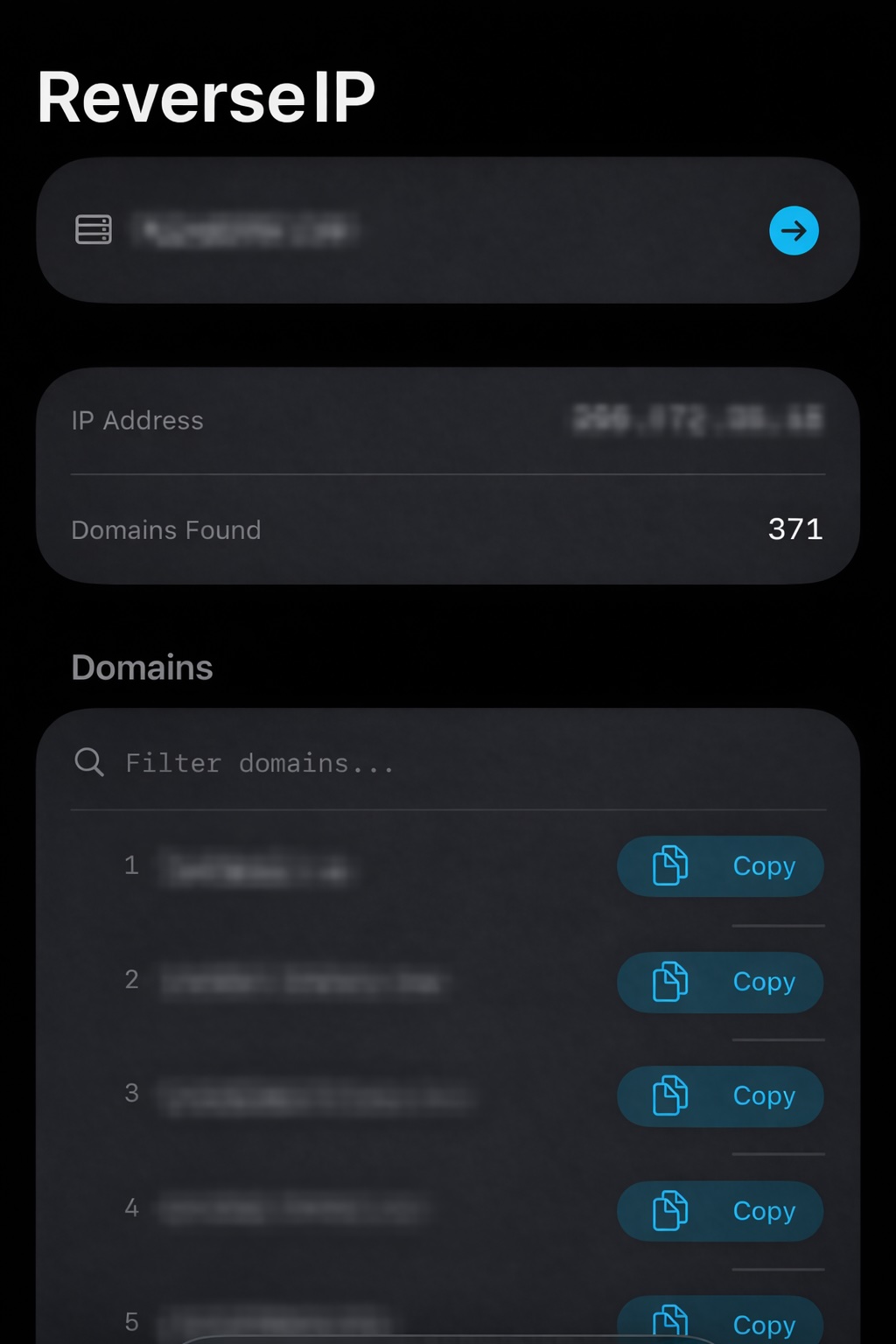
<p>NetProbe brings professional-grade network diagnostics to your iPhone — no terminal window or networking degree required. Here's how to use the Reverse IP tool:</p>
<ol class="steps">
<li>Open NetProbe and navigate to the Reverse IP tool.</li>
<li>Enter a domain name or IP address — either works as your starting point.</li>
<li>Run the lookup. NetProbe queries DNS records and hosting databases and returns all domains associated with that IP.</li>
<li>Review the results. The co-hosted domain count alone tells a story.</li>
</ol>
<div class="callout">
<p><strong>Pro tip:</strong> The Reverse IP tool is part of the NetProbe Pro upgrade, available as a one-time purchase alongside the full suite of 18 diagnostic tools.</p>
<figure class="post__image post__image--center"><img loading="lazy"  src="https://myrcbox.com/media/posts/27/netprobe_reverse_dns.jpg" alt="" width="512" height="768" sizes="(max-width: 1920px) 100vw, 1920px" srcset="https://myrcbox.com/media/posts/27/responsive/netprobe_reverse_dns-xs.jpg 640w ,https://myrcbox.com/media/posts/27/responsive/netprobe_reverse_dns-sm.jpg 768w ,https://myrcbox.com/media/posts/27/responsive/netprobe_reverse_dns-md.jpg 1024w ,https://myrcbox.com/media/posts/27/responsive/netprobe_reverse_dns-lg.jpg 1366w ,https://myrcbox.com/media/posts/27/responsive/netprobe_reverse_dns-xl.jpg 1600w ,https://myrcbox.com/media/posts/27/responsive/netprobe_reverse_dns-2xl.jpg 1920w"></figure>
</div>
<hr class="divider">
<h2>Reading the Results</h2>
<table class="result-grid">
<thead>
<tr>
<th>Co-hosted domains</th>
<th>What it suggests</th>
</tr>
</thead>
<tbody>
<tr>
<td class="range">1 – 10</td>
<td class="verdict">VPS, dedicated server, or cloud instance. <span class="note">Generally good for performance and security isolation.</span></td>
</tr>
<tr>
<td class="range">10 – 50</td>
<td class="verdict">Typical shared hosting. <span class="note">Not unusual or inherently problematic — worth a closer look at the domain names if you have concerns.</span></td>
</tr>
<tr>
<td class="range">50+</td>
<td class="verdict">Dense shared hosting. <span class="note">Common on budget plans. For security investigations, this environment warrants additional scrutiny.</span></td>
</tr>
</tbody>
</table>
<p>Domain quality matters too. Legitimate business names and recognizable brands among the co-residents are reassuring. Keyword-stuffed strings, suspicious TLDs, or obviously auto-generated domain names are worth flagging.</p>
<hr class="divider">
<h2>A Practical Example</h2>
<p>Imagine you're evaluating a new SaaS vendor your company is considering integrating with. Their pitch deck looks polished, their pricing is competitive. Before signing anything, you drop their domain into NetProbe's Reverse IP tool. The result: their domain shares an IP with 340 other sites, several of which follow obvious spam naming patterns.</p>
<p>This doesn't automatically disqualify them — perhaps they're simply on budget hosting while early-stage. But it's a data point. Maybe you ask them directly about their infrastructure. Maybe you decide the risk profile doesn't fit your requirements. Either way, you made an informed decision rather than a blind one.</p>
<p>That's the value of having the right tool in your pocket.</p>
<hr class="divider">
<h2>Beyond Reverse IP: NetProbe's Full Toolkit</h2>
<p>Reverse IP lookup is one piece of a broader network intelligence picture. NetProbe brings 18 diagnostic tools into a single, clean iOS app: DNS Lookup, WHOIS, Ping, Traceroute, Port Scanner, SSL Certificate Inspector, HTTP Headers, IP Geolocation, and more — with four tools free and the full suite unlocking with a one-time Pro purchase.</p>
<p>Whether you're an IT professional, a developer, or simply someone who wants to understand the infrastructure behind the sites they visit, NetProbe turns your iPhone into a capable network analysis tool.</p>
<h2>Get NetProbe</h2>
<p>Four tools free. Full suite unlocked with a one-time Pro purchase. No subscription, no account required.</p>
<figure class="post__image post__image--center"><a href="https://apps.apple.com/us/app/netprobe/id6760551997" ><img loading="lazy" class="post__image post__image--center" src="https://myrcbox.com/media/posts/27/download_appstore_250.png" alt="" width="250" height="125" sizes="(max-width: 1920px) 100vw, 1920px" srcset="https://myrcbox.com/media/posts/27/responsive/download_appstore_250-xs.png 640w ,https://myrcbox.com/media/posts/27/responsive/download_appstore_250-sm.png 768w ,https://myrcbox.com/media/posts/27/responsive/download_appstore_250-md.png 1024w ,https://myrcbox.com/media/posts/27/responsive/download_appstore_250-lg.png 1366w ,https://myrcbox.com/media/posts/27/responsive/download_appstore_250-xl.png 1600w ,https://myrcbox.com/media/posts/27/responsive/download_appstore_250-2xl.png 1920w"></figure></a></p>
<div class="cta-block">
<p> </p>
<p> </p>
<p> </p>
</div>
</article>
</main>
            ]]>
        </content>
    </entry>
    <entry>
        <title>Why coding a small app might be the best thing for your anxiety</title>
        <author>
            <name>Sylvain Lafrance</name>
        </author>
        <link href="https://myrcbox.com/why-coding-a-small-app-might-be-the-best-thing-for-your-anxiety/"/>
        <id>https://myrcbox.com/why-coding-a-small-app-might-be-the-best-thing-for-your-anxiety/</id>
        <media:content url="https://myrcbox.com/media/posts/26/anxietyvscoding.jpg" medium="image" />
            <category term="MY POSTS"/>

        <updated>2026-03-29T15:47:22-04:00</updated>
            <summary type="html">
                <![CDATA[
                        <img src="https://myrcbox.com/media/posts/26/anxietyvscoding.jpg" alt="" />
                    There's a peculiar kind of calm that settles in when you're deep in a Xcode project, tracking down why a SwiftUI view isn't updating the way you expect. It's not the absence of stress — it's a different kind of focus altogether. For many developers,&hellip;
                ]]>
            </summary>
        <content type="html">
            <![CDATA[
                    <p><img src="https://myrcbox.com/media/posts/26/anxietyvscoding.jpg" class="type:primaryImage" alt="" /></p>
                <article class="post-content">
<p class="post-intro">There's a peculiar kind of calm that settles in when you're deep in a Xcode project, tracking down why a SwiftUI view isn't updating the way you expect. It's not the absence of stress — it's a different kind of focus altogether. For many developers, the act of building apps isn't just a career or a side hustle. It's a surprisingly effective tool for managing anxiety.</p>
<p>This might sound counterintuitive. Coding is often associated with frustration, imposter syndrome, and the endless scroll of Stack Overflow threads at midnight. But beneath that surface, app development has a structure that the anxious mind genuinely craves.</p>
<h2>Problems with edges</h2>
<p>Anxiety thrives in ambiguity. The worried mind loops over open-ended threats: vague social fears, formless what-ifs, futures that can't be solved. What makes coding unusual as an activity is that its problems have edges. A bug either exists or it doesn't. A function either compiles or it doesn't. That definiteness is deeply soothing for a brain otherwise stuck in fog.</p>
<p>When you're working on an app — even a small utility — every task you tackle has a visible boundary. You add a feature, it works, you move on. The feedback loop is tight and concrete. For people whose anxiety manifests as rumination or a sense of helplessness, completing even a tiny coding task delivers a quiet but real sense of agency.</p>
<h2>Flow, not distraction</h2>
<p>There's an important distinction between distraction and flow. Scrolling social media to escape anxiety is distraction — the discomfort is still there, just temporarily masked. Coding, when it clicks, produces something closer to flow: a state where attention is fully absorbed by a meaningful, calibrated challenge.</p>
<p>Psychologist Mihaly Csikszentmihalyi described flow as occurring when the difficulty of a task closely matches your skill level — hard enough to be engaging, achievable enough to avoid panic. App development is naturally structured this way. You start with a tutorial. You graduate to your own project. You hit a wall, search for solutions, break through. The progression is built into the craft.</p>
<p>This matters for anxiety specifically because flow interrupts the default mode network — the part of the brain responsible for self-referential thinking, worry, and rumination. You can't simultaneously be in flow and spiraling. The two states compete, and flow wins.</p>
<h2>The satisfaction of making something real</h2>
<p>Many forms of anxiety are rooted in a sense of passivity — the feeling that things happen <em>to</em> you rather than because of you. Shipping even a small app, or reaching the end of a development session with something tangible to show for it, pushes back against that feeling in a concrete way.</p>
<p>This is partly why indie app development has attracted so many people who describe themselves as anxious or introverted. It's creative work that doesn't require a room full of people. The feedback is visible. The control is yours. You decide what to build, when to build it, and what done looks like.</p>
<p>There's also something almost meditative about the iterative nature of coding: write, test, fix, repeat. It's structured repetition with a goal, which is precisely the kind of activity that occupational therapists and CBT practitioners recommend for anxiety management — not as a cure, but as a reliable tool for regulation.</p>
<h2>Starting small is the whole point</h2>
<p>The barrier to entry matters here. If building an app felt like constructing a skyscraper, it would produce anxiety rather than relieve it. But the iOS ecosystem today makes it genuinely possible to build something useful in a weekend. A timer. A habit tracker. A simple note tool. The scope doesn't need to be ambitious.</p>
<p>In fact, starting small is the point. One of the cognitive patterns that sustains anxiety is catastrophizing — treating every task as if it carries enormous stakes. Choosing a tiny, low-stakes app project is almost a deliberate therapeutic choice: you're practicing the skill of starting without needing the outcome to matter enormously.</p>
<p>And often, unexpectedly, that small project becomes something you ship. And then the next one is easier to start.</p>
<h2>It's not a cure — but it's real</h2>
<p>None of this replaces therapy, medication, or professional support for people dealing with clinical anxiety. But for the everyday texture of anxious thinking — the background hum of worry, the restlessness, the need for something to <em>do</em> — app development offers something genuine: a structured, creative, achievable challenge that engages the mind, produces results, and gives you something to point to and say, <em>I made that.</em></p>
<p>If you've been circling a project idea for months and never started because it felt too uncertain, too small, or too unlikely to matter — that hesitation is the anxiety talking. Open a new Xcode project. Name it something. Write the first view.</p>
<p>The quiet that follows might surprise you.</p>
<p> </p>
</article>
            ]]>
        </content>
    </entry>
    <entry>
        <title>NetProbe: The Ultimate Network Diagnostic App for Fast, Reliable Wi‑Fi on iPhone and iPad</title>
        <author>
            <name>Sylvain Lafrance</name>
        </author>
        <link href="https://myrcbox.com/netprobe-the-ultimate-network-diagnostic-app-for-fast-reliable-wi-fi-on-iphone-and-ipad/"/>
        <id>https://myrcbox.com/netprobe-the-ultimate-network-diagnostic-app-for-fast-reliable-wi-fi-on-iphone-and-ipad/</id>
        <media:content url="https://myrcbox.com/media/posts/8/NetProbe_1024x1024.jpg" medium="image" />
            <category term="MY POSTS"/>

        <updated>2026-03-24T16:10:54-04:00</updated>
            <summary type="html">
                <![CDATA[
                        <img src="https://myrcbox.com/media/posts/8/NetProbe_1024x1024.jpg" alt="" />
                    If you’ve ever struggled with slow Wi‑Fi, unexplained lag, or devices mysteriously dropping off your network, you know how frustrating it can be. In today’s connected world, a stable network isn’t optional — it’s essential. That’s why more users are turning to NetProbe, the powerful&hellip;
                ]]>
            </summary>
        <content type="html">
            <![CDATA[
                    <p><img src="https://myrcbox.com/media/posts/8/NetProbe_1024x1024.jpg" class="type:primaryImage" alt="" /></p>
                <!-- wp:paragraph -->
<p>If you’ve ever struggled with slow Wi‑Fi, unexplained lag, or devices mysteriously dropping off your network, you know how frustrating it can be. In today’s connected world, a stable network isn’t optional — it’s essential. That’s why more users are turning to <strong>NetProbe</strong>, the powerful <strong>network diagnostic app for iOS</strong> that makes troubleshooting fast, simple, and surprisingly enjoyable.</p>
<!-- /wp:paragraph -->
<p> </p>
<!-- wp:paragraph -->
<p>Whether you’re a home user, gamer, IT professional, or tech enthusiast, <strong>NetProbe</strong> gives you the tools you need to understand and optimize your network with confidence.</p>
<!-- /wp:paragraph -->
<p> </p>
<!-- wp:heading {"textAlign":"center"} -->
<h2 class="wp-block-heading has-text-align-center align-center"><a href="https://apps.apple.com/ca/app/netprobe/id6760551997">👉 <strong>Download NetProbe on the App Store</strong></a></h2>
<!-- /wp:heading -->
<p> </p>
<!-- wp:image {"lightbox":{"enabled":false},"id":877,"sizeSlug":"full","linkDestination":"custom","align":"center"} -->
<figure class="post__image post__image--center align-center"><a href="https://apps.apple.com/ca/app/netprobe/id6760551997"><img loading="lazy"  src="https://myrcbox.com/media/posts/8/DownloadAppStore.png" alt="" width="239" height="80" sizes="(max-width: 1920px) 100vw, 1920px" srcset="https://myrcbox.com/media/posts/8/responsive/DownloadAppStore-xs.png 640w ,https://myrcbox.com/media/posts/8/responsive/DownloadAppStore-sm.png 768w ,https://myrcbox.com/media/posts/8/responsive/DownloadAppStore-md.png 1024w ,https://myrcbox.com/media/posts/8/responsive/DownloadAppStore-lg.png 1366w ,https://myrcbox.com/media/posts/8/responsive/DownloadAppStore-xl.png 1600w ,https://myrcbox.com/media/posts/8/responsive/DownloadAppStore-2xl.png 1920w"></figure></a></p>
<!-- /wp:image --><!-- wp:heading -->
<h2 class="wp-block-heading">🔍 The Best Network Scanner and Wi‑Fi Troubleshooting Tool for iOS</h2>
<!-- /wp:heading -->
<p> </p>
<!-- wp:paragraph -->
<p>NetProbe is designed from the ground up to deliver <strong>accurate network analysis</strong>, <strong>fast device discovery</strong>, and <strong>clear diagnostic results</strong> — all wrapped in a clean, modern interface that feels right at home on iPhone and iPad.</p>
<!-- /wp:paragraph -->
<p> </p>
<!-- wp:heading {"level":3} -->
<h3 class="wp-block-heading"><strong>🚀 Fast, Accurate Network Scans</strong></h3>
<!-- /wp:heading -->
<p> </p>
<!-- wp:paragraph -->
<p>Quickly scan your local network to identify every connected device. NetProbe’s <strong>network scanner</strong> helps you:</p>
<!-- /wp:paragraph -->
<p> </p>
<!-- wp:list -->
<ul class="wp-block-list"><!-- wp:list-item -->
<li>detect unknown devices</li>
<!-- /wp:list-item --> <!-- wp:list-item -->
<li>monitor your home network</li>
<!-- /wp:list-item --> <!-- wp:list-item -->
<li>understand what’s using your bandwidth</li>
<!-- /wp:list-item --></ul>
<!-- /wp:list -->
<p> </p>
<!-- wp:paragraph -->
<p>Perfect for improving Wi‑Fi security and performance.</p>
<!-- /wp:paragraph -->
<p> </p>
<!-- wp:heading {"level":3} -->
<h3 class="wp-block-heading"><strong>🎯 Advanced Ping Tool for iOS</strong></h3>
<!-- /wp:heading -->
<p> </p>
<!-- wp:paragraph -->
<p>NetProbe includes one of the most intuitive and reliable <strong>ping tools</strong> available on mobile. Instantly measure:</p>
<!-- /wp:paragraph -->
<p> </p>
<!-- wp:list -->
<ul class="wp-block-list"><!-- wp:list-item -->
<li>latency</li>
<!-- /wp:list-item --> <!-- wp:list-item -->
<li>packet loss</li>
<!-- /wp:list-item --> <!-- wp:list-item -->
<li>connection stability</li>
<!-- /wp:list-item --></ul>
<!-- /wp:list -->
<p> </p>
<!-- wp:paragraph -->
<p>Ideal for gamers, remote workers, and anyone who needs a fast, stable connection.</p>
<!-- /wp:paragraph -->
<p> </p>
<!-- wp:heading {"level":3} -->
<h3 class="wp-block-heading"><strong>🛰️ Visual Traceroute for Easy Network Path Analysis</strong></h3>
<!-- /wp:heading -->
<p> </p>
<!-- wp:paragraph -->
<p>Traditional traceroute tools are cluttered and confusing. NetProbe transforms traceroute into a <strong>clean, visual experience</strong>, helping you pinpoint where slowdowns or failures occur along your network path.</p>
<!-- /wp:paragraph -->
<p> </p>
<!-- wp:heading {"level":3} -->
<h3 class="wp-block-heading"><strong>✨ Clean, Modern UI Built for Speed</strong></h3>
<!-- /wp:heading -->
<p> </p>
<!-- wp:paragraph -->
<p>Unlike many network utilities, NetProbe is beautifully designed — no clutter, no ads, no outdated interfaces. Just smooth, fast, intuitive tools that make network diagnostics effortless.</p>
<!-- /wp:paragraph -->
<p> </p>
<!-- wp:heading -->
<h2 class="wp-block-heading">🌐 Why NetProbe Is the Best Network Utility App for iPhone and iPad</h2>
<!-- /wp:heading -->
<p> </p>
<!-- wp:paragraph -->
<p>NetProbe stands out because it combines <strong>professional‑grade network tools</strong> with a <strong>user‑friendly design</strong>. It’s powerful enough for IT pros, yet simple enough for everyday users.</p>
<!-- /wp:paragraph -->
<p> </p>
<!-- wp:heading {"level":3} -->
<h3 class="wp-block-heading"><strong>Key Features</strong></h3>
<!-- /wp:heading -->
<p> </p>
<!-- wp:list -->
<ul class="wp-block-list"><!-- wp:list-item -->
<li>Fast <strong>network scanning</strong></li>
<!-- /wp:list-item --> <!-- wp:list-item -->
<li>Accurate <strong>ping testing</strong></li>
<!-- /wp:list-item --> <!-- wp:list-item -->
<li>Clean <strong>traceroute visualization</strong></li>
<!-- /wp:list-item --> <!-- wp:list-item -->
<li>Modern, ad‑free interface</li>
<!-- /wp:list-item --> <!-- wp:list-item -->
<li>Reliable diagnostics you can trust</li>
<!-- /wp:list-item --></ul>
<!-- /wp:list -->
<p> </p>
<!-- wp:paragraph -->
<p>If you’re searching for the best <strong>Wi‑Fi troubleshooting app</strong>, <strong>network analyzer</strong>, or <strong>ping app for iOS</strong>, NetProbe delivers everything you need in one lightweight package.</p>
<!-- /wp:paragraph -->
<p> </p>
<!-- wp:heading -->
<h2 class="wp-block-heading">🔥 Take Control of Your Network Today</h2>
<!-- /wp:heading -->
<p> </p>
<!-- wp:paragraph -->
<p>Your network powers your work, entertainment, smart home, and daily life. Don’t leave it to guesswork. With NetProbe, you get <strong>clarity, control, and confidence</strong> — all from your iPhone or iPad.</p>
<!-- /wp:paragraph -->
<p> </p>
<!-- wp:heading {"textAlign":"center"} -->
<h2 class="wp-block-heading has-text-align-center align-center"><a href="https://apps.apple.com/ca/app/netprobe/id6760551997">👉 <strong>Download NetProbe now and experience the difference</strong></a></h2>
<figure class="post__image post__image--center"><a href="https://apps.apple.com/ca/app/netprobe/id6760551997"><img loading="lazy"  src="https://myrcbox.com/media/posts/8/DownloadAppStore.png" alt="" width="239" height="80" sizes="(max-width: 1920px) 100vw, 1920px" srcset="https://myrcbox.com/media/posts/8/responsive/DownloadAppStore-xs.png 640w ,https://myrcbox.com/media/posts/8/responsive/DownloadAppStore-sm.png 768w ,https://myrcbox.com/media/posts/8/responsive/DownloadAppStore-md.png 1024w ,https://myrcbox.com/media/posts/8/responsive/DownloadAppStore-lg.png 1366w ,https://myrcbox.com/media/posts/8/responsive/DownloadAppStore-xl.png 1600w ,https://myrcbox.com/media/posts/8/responsive/DownloadAppStore-2xl.png 1920w"></figure></a></p>
<!-- /wp:responsive-lightbox/gallery -->
            ]]>
        </content>
    </entry>
    <entry>
        <title>Why I Build iOS Apps</title>
        <author>
            <name>Sylvain Lafrance</name>
        </author>
        <link href="https://myrcbox.com/why-i-build-ios-apps/"/>
        <id>https://myrcbox.com/why-i-build-ios-apps/</id>
        <media:content url="https://myrcbox.com/media/posts/7/coding.png" medium="image" />
            <category term="MY POSTS"/>

        <updated>2026-03-20T16:42:05-04:00</updated>
            <summary type="html">
                <![CDATA[
                        <img src="https://myrcbox.com/media/posts/7/coding.png" alt="" />
                    From the Commodore 64 to iOS Development My journey into software began in the 80s, sitting in front of a Commodore 64, typing code from magazines and discovering the thrill of making something appear on the screen that wasn’t there a moment earlier. That early&hellip;
                ]]>
            </summary>
        <content type="html">
            <![CDATA[
                    <p><img src="https://myrcbox.com/media/posts/7/coding.png" class="type:primaryImage" alt="" /></p>
                <!-- wp:heading -->
<h2 class="wp-block-heading">From the Commodore 64 to iOS Development</h2>
<!-- /wp:heading -->
<p> </p>
<!-- wp:paragraph -->
<p>My journey into software began in the 80s, sitting in front of a <strong>Commodore 64</strong>, typing code from magazines and discovering the thrill of making something appear on the screen that wasn’t there a moment earlier. That early spark carried me into the shareware era, where I built and distributed small programs simply because creating things felt meaningful. Today, iOS development is the modern continuation of that same passion.</p>
<!-- /wp:paragraph -->
<p> </p>
<!-- wp:heading {"level":3} -->
<h3 class="wp-block-heading">Creativity through problem‑solving</h3>
<!-- /wp:heading -->
<p> </p>
<!-- wp:paragraph -->
<p>From the beginning, the real excitement wasn’t just finishing a program — it was the creative process of figuring out <em>how</em> to make it work. Problem‑solving has always been my favorite form of creativity. Exploring constraints, shaping ideas, and finding elegant solutions still brings the same satisfaction it did in the 80s. iOS development gives me endless opportunities to chase that feeling.</p>
<!-- /wp:paragraph -->
<p> </p>
<!-- wp:heading {"level":3} -->
<h3 class="wp-block-heading">The reward of building something from nothing</h3>
<!-- /wp:heading -->
<p> </p>
<!-- wp:paragraph -->
<p>One of the things that hooked me early on was the magic of turning a blank screen into something real. A new Xcode project today feels like the modern version of that blinking cursor on the Commodore 64 — full of potential. A few lines of Swift become a feature. A rough idea becomes a workflow. An app becomes something people can download and use. That transformation is deeply rewarding, and it’s one of the reasons I keep building.</p>
<!-- /wp:paragraph -->
<p> </p>
<!-- wp:heading {"level":3} -->
<h3 class="wp-block-heading">A place where my mind settles</h3>
<!-- /wp:heading -->
<p> </p>
<!-- wp:paragraph -->
<p>Coding has always been a way for me to quiet the noise. When I’m deep in a problem, everything else fades out. There’s focus, clarity, and a sense of flow that leaves me more grounded than when I started. iOS development gives me a reliable mental space where I can think deeply and come out feeling centered.</p>
<!-- /wp:paragraph -->
<p> </p>
<!-- wp:heading {"level":3} -->
<h3 class="wp-block-heading">A slow, steady path toward independence</h3>
<!-- /wp:heading -->
<p> </p>
<!-- wp:paragraph -->
<p>I’m not chasing a viral hit or trying to recreate the shareware boom. My goal is steady and realistic: build useful apps, refine them, and create a modest revenue stream that supports my retirement plans. Even small earnings compound over time. Indie development is slow, but it’s one of the few creative and technical pursuits where your work can continue generating value long after you’ve built it.</p>
<!-- /wp:paragraph -->
<p> </p>
<!-- wp:heading {"level":3} -->
<h3 class="wp-block-heading">What keeps me building</h3>
<!-- /wp:heading -->
<p> </p>
<!-- wp:list -->
<ul class="wp-block-list"><!-- wp:list-item -->
<li>Coding has been part of my life since the Commodore 64 era.</li>
<!-- /wp:list-item --> <!-- wp:list-item -->
<li>Solving problems creatively still feels as exciting as it did in the 80s.</li>
<!-- /wp:list-item --> <!-- wp:list-item -->
<li>Building something from nothing brings a deep sense of satisfaction.</li>
<!-- /wp:list-item --> <!-- wp:list-item -->
<li>iOS rewards polish, thoughtfulness, and craft.</li>
<!-- /wp:list-item --> <!-- wp:list-item -->
<li>Even small financial wins support long‑term independence.</li>
<!-- /wp:list-item --> <!-- wp:list-item -->
<li>The process itself calms my mind and keeps me grounded.</li>
<!-- /wp:list-item --> <!-- wp:list-item -->
<li>The reward of seeing an idea become a real, working app never gets old.</li>
<!-- /wp:list-item --></ul>
<!-- /wp:list -->
<p> </p>
<!-- wp:paragraph -->
<p>iOS development is more than a skill for me — it’s a lifelong thread that connects curiosity, creativity, satisfaction, and the simple joy of making things. It’s a craft I enjoy, a practice that keeps me centered, and a long‑term investment in the future I’m building.</p>
<!-- /wp:paragraph -->
<p> </p>
<!-- wp:heading {"textAlign":"center"} -->
<h2 class="wp-block-heading has-text-align-center"><a href="https://apps.apple.com/us/developer/sylvain-lafrance/id1197090441" target="_blank" rel="noreferrer noopener">Me on the App Store!</a></h2>
<!-- /wp:heading -->
<p> </p>
<!-- wp:paragraph -->
<p> </p>
<!-- /wp:paragraph -->
            ]]>
        </content>
    </entry>
    <entry>
        <title>What Is Vibe Coding?</title>
        <author>
            <name>Sylvain Lafrance</name>
        </author>
        <link href="https://myrcbox.com/what-is-vibe-coding/"/>
        <id>https://myrcbox.com/what-is-vibe-coding/</id>
        <media:content url="https://myrcbox.com/media/posts/6/vibe_coding-1.png" medium="image" />
            <category term="MY POSTS"/>

        <updated>2025-10-05T22:24:52-04:00</updated>
            <summary type="html">
                <![CDATA[
                        <img src="https://myrcbox.com/media/posts/6/vibe_coding-1.png" alt="" />
                    Vibe Coding: When Intuition Meets Development There's a shift happening in how we think about writing code. While traditional software development emphasizes rigorous planning, detailed specifications, and methodical execution, a different approach has been gaining traction—one that developers are calling "vibe coding." Vibe coding is&hellip;
                ]]>
            </summary>
        <content type="html">
            <![CDATA[
                    <p><img src="https://myrcbox.com/media/posts/6/vibe_coding-1.png" class="type:primaryImage" alt="" /></p>
                <!-- wp:heading {"level":1} -->
<h1 class="wp-block-heading">Vibe Coding: When Intuition Meets Development</h1>
<!-- /wp:heading -->
<p> </p>
<!-- wp:paragraph -->
<p>There's a shift happening in how we think about writing code. While traditional software development emphasizes rigorous planning, detailed specifications, and methodical execution, a different approach has been gaining traction—one that developers are calling "vibe coding."</p>
<!-- /wp:paragraph -->
<p> </p>
<!-- wp:heading -->
<h2 class="wp-block-heading">What Is Vibe Coding?</h2>
<!-- /wp:heading -->
<p> </p>
<!-- wp:paragraph -->
<p>Vibe coding is less about following strict methodologies and more about letting intuition and flow guide the development process. It's that state where you're not overthinking every architectural decision or getting bogged down in premature optimization. Instead, you're feeling out the problem, letting solutions emerge organically, and trusting your instincts about what feels right.</p>
<!-- /wp:paragraph -->
<p> </p>
<!-- wp:paragraph -->
<p>Think of it as jazz improvisation versus reading sheet music. Both produce music, but the creative process is fundamentally different.</p>
<!-- /wp:paragraph -->
<p> </p>
<!-- wp:heading -->
<h2 class="wp-block-heading">The Flow State</h2>
<!-- /wp:heading -->
<p> </p>
<!-- wp:paragraph -->
<p>At its core, vibe coding is about achieving and maintaining flow state. You know that feeling when you're so absorbed in coding that hours pass like minutes? When your fingers seem to know what to type before your conscious mind fully articulates it? That's the vibe.</p>
<!-- /wp:paragraph -->
<p> </p>
<!-- wp:paragraph -->
<p>This approach thrives on:</p>
<!-- /wp:paragraph -->
<p> </p>
<!-- wp:list -->
<ul class="wp-block-list"><!-- wp:list-item -->
<li><strong>Momentum over perfection</strong> — Getting something working first, refining later</li>
<!-- /wp:list-item --> <!-- wp:list-item -->
<li><strong>Intuitive architecture</strong> — Letting patterns emerge rather than forcing them</li>
<!-- /wp:list-item --> <!-- wp:list-item -->
<li><strong>Creative experimentation</strong> — Trying things to see how they feel, not just how they perform</li>
<!-- /wp:list-item --> <!-- wp:list-item -->
<li><strong>Minimal friction</strong> — Reducing anything that breaks your concentration</li>
<!-- /wp:list-item --></ul>
<!-- /wp:list -->
<p> </p>
<!-- wp:heading -->
<h2 class="wp-block-heading">When Vibe Coding Works Best</h2>
<!-- /wp:heading -->
<p> </p>
<!-- wp:paragraph -->
<p>Vibe coding particularly shines in certain contexts. Prototyping and early-stage development benefit enormously from this approach—you're exploring possibilities rather than cementing solutions. Creative projects, personal side projects, and situations where you're working in familiar territory with technologies you know well are ideal for letting the vibe guide you.</p>
<!-- /wp:paragraph -->
<p> </p>
<!-- wp:paragraph -->
<p>It's also powerful when you're solving novel problems that don't have established patterns. Sometimes the "right" solution reveals itself through exploration rather than analysis.</p>
<!-- /wp:paragraph -->
<p> </p>
<!-- wp:heading -->
<h2 class="wp-block-heading">The Pitfalls</h2>
<!-- /wp:heading -->
<p> </p>
<!-- wp:paragraph -->
<p>Of course, vibe coding isn't always the answer. Production systems with strict requirements, team projects requiring consistent patterns, and highly regulated industries need more structure. Code that others will maintain demands clarity over cleverness, and critical systems where bugs have serious consequences require rigorous testing and documentation.</p>
<!-- /wp:paragraph -->
<p> </p>
<!-- wp:paragraph -->
<p>The key is knowing when to ride the vibe and when to pump the brakes and get methodical.</p>
<!-- /wp:paragraph -->
<p> </p>
<!-- wp:heading -->
<h2 class="wp-block-heading">Finding Balance</h2>
<!-- /wp:heading -->
<p> </p>
<!-- wp:paragraph -->
<p>The best developers don't choose between vibe coding and structured development—they know when to use each. Maybe you vibe code during your initial spike to explore the problem space, then shift into structured mode when implementing the actual solution. Or you maintain architectural rigor while allowing yourself to vibe code within well-defined boundaries.</p>
<!-- /wp:paragraph -->
<p> </p>
<!-- wp:paragraph -->
<p>Some teams even designate "vibe time"—periods where developers can explore, experiment, and follow their intuition without the pressure of deliverables.</p>
<!-- /wp:paragraph -->
<p> </p>
<!-- wp:heading -->
<h2 class="wp-block-heading">Embracing Your Development Style</h2>
<!-- /wp:heading -->
<p> </p>
<!-- wp:paragraph -->
<p>Ultimately, vibe coding is about acknowledging that software development is both an engineering discipline and a creative practice. Sometimes the best code comes not from following a process, but from trusting yourself, getting into flow, and letting the solution reveal itself.</p>
<!-- /wp:paragraph -->
<p> </p>
<!-- wp:paragraph -->
<p>The next time you sit down to code, pay attention to when you're most productive and creative. You might find that your best work happens when you stop overthinking and just... vibe with it.</p>
<!-- /wp:paragraph -->
            ]]>
        </content>
    </entry>
    <entry>
        <title>The shareware history</title>
        <author>
            <name>Sylvain Lafrance</name>
        </author>
        <link href="https://myrcbox.com/the-shareware-history/"/>
        <id>https://myrcbox.com/the-shareware-history/</id>
        <media:content url="https://myrcbox.com/media/posts/5/shareware.png" medium="image" />
            <category term="MY POSTS"/>

        <updated>2025-10-05T22:02:57-04:00</updated>
            <summary type="html">
                <![CDATA[
                        <img src="https://myrcbox.com/media/posts/5/shareware.png" alt="" />
                    The Golden Age of Shareware: How "Try Before You Buy" Revolutionized 1980s Software Before app stores, before digital downloads, before the internet as we know it, there was shareware—a revolutionary distribution model that democratized software development and gave birth to some of the most beloved&hellip;
                ]]>
            </summary>
        <content type="html">
            <![CDATA[
                    <p><img src="https://myrcbox.com/media/posts/5/shareware.png" class="type:primaryImage" alt="" /></p>
                <!-- wp:heading {"level":1} -->
<h1 class="wp-block-heading">The Golden Age of Shareware: How "Try Before You Buy" Revolutionized 1980s Software</h1>
<!-- /wp:heading -->
<p> </p>
<!-- wp:paragraph -->
<p>Before app stores, before digital downloads, before the internet as we know it, there was shareware—a revolutionary distribution model that democratized software development and gave birth to some of the most beloved games and applications of the personal computer era.</p>
<!-- /wp:paragraph -->
<p> </p>
<!-- wp:heading -->
<h2 class="wp-block-heading">What Was Shareware?</h2>
<!-- /wp:heading -->
<p> </p>
<!-- wp:paragraph -->
<p>Shareware was elegantly simple: developers distributed their software freely, allowing users to try it before deciding whether to purchase a full version or registration. Unlike freeware (completely free) or commercial software (sold in boxes at stores), shareware operated on an honor system that reflected the early computing community's idealism and trust.</p>
<!-- /wp:paragraph -->
<p> </p>
<!-- wp:paragraph -->
<p>The typical shareware model worked like this: you'd receive a functional version of the program, often with some limitations—maybe the first few levels of a game, reduced features, or frequent registration reminders. If you liked it, you'd mail a check to the developer, who would send you the full version, a printed manual, and sometimes bonus content or technical support.</p>
<!-- /wp:paragraph -->
<p> </p>
<!-- wp:heading -->
<h2 class="wp-block-heading">The Perfect Storm of Circumstances</h2>
<!-- /wp:heading -->
<p> </p>
<!-- wp:paragraph -->
<p>Several factors converged in the 1980s to make shareware viable. The personal computer revolution was underway, with machines like the Apple II, Commodore 64, and IBM PC finding their way into homes and small businesses. Yet commercial software was expensive, often costing $50 to $100 or more—substantial money in 1980s dollars.</p>
<!-- /wp:paragraph -->
<p> </p>
<!-- wp:paragraph -->
<p>Distribution was another key factor. Bulletin Board Systems (BBS) emerged as digital gathering places where users could dial in with modems and download files. Computer user groups held regular meetings where members swapped floppy disks. These grassroots distribution channels cost developers almost nothing, bypassing the expensive retail distribution system that traditionally gave publishers their stranglehold on the industry.</p>
<!-- /wp:paragraph -->
<p> </p>
<!-- wp:heading -->
<h2 class="wp-block-heading">The Pioneers</h2>
<!-- /wp:heading -->
<p> </p>
<!-- wp:paragraph -->
<p>Bob Wallace coined the term "shareware" in 1983 with his word processor PC-Write, but the concept had earlier roots. Andrew Fluegelman's PC-Talk communication program (1982) used what he called "freeware"—though his definition meant something closer to what we'd call shareware today.</p>
<!-- /wp:paragraph -->
<p> </p>
<!-- wp:paragraph -->
<p>The model truly exploded with games. Scott Miller's Apogee Software pioneered the "episodic" approach with games like Kingdom of Kroz and Beyond the Titanic, offering the first episode free and charging for subsequent installments. This strategy would later birth Commander Keen and Duke Nukem, making Apogee a shareware powerhouse.</p>
<!-- /wp:paragraph -->
<p> </p>
<!-- wp:paragraph -->
<p>Jim Knopf's PC-File database program demonstrated that business software could thrive under the shareware model. His company, ButtonWare, proved that treating customers with respect and offering genuine value could build a sustainable business without traditional marketing or retail presence.</p>
<!-- /wp:paragraph -->
<p> </p>
<!-- wp:heading -->
<h2 class="wp-block-heading">The Culture and Community</h2>
<!-- /wp:heading -->
<p> </p>
<!-- wp:paragraph -->
<p>Shareware wasn't just a business model—it was a philosophy. Many developers included personal notes in their documentation, sharing their stories and motivations. Registration often felt like joining a club rather than merely purchasing a product. Some developers became celebrities within the community, known for their responsiveness to user feedback and their willingness to engage directly with their audience.</p>
<!-- /wp:paragraph -->
<p> </p>
<!-- wp:paragraph -->
<p>The Association of Shareware Professionals, founded in 1987, attempted to codify standards and protect the shareware brand from those who abused the honor system or misrepresented their products. The organization helped legitimize shareware in the eyes of both users and the press.</p>
<!-- /wp:paragraph -->
<p> </p>
<!-- wp:heading -->
<h2 class="wp-block-heading">Why It Worked</h2>
<!-- /wp:heading -->
<p> </p>
<!-- wp:paragraph -->
<p>The shareware model succeeded because it aligned incentives beautifully. Users got to evaluate software risk-free before spending money—crucial when a bad purchase meant wasting a significant sum. Developers received direct feedback from users and captured revenue they might never have seen through traditional channels. The low barrier to entry meant talented programmers could reach audiences regardless of their business connections or capital.</p>
<!-- /wp:paragraph -->
<p> </p>
<!-- wp:paragraph -->
<p>The honor system worked better than cynics might have predicted. While piracy certainly existed, enough users paid to make shareware viable for hundreds of developers. Many users reported feeling a genuine obligation to register software they used regularly, and some even paid for programs they'd stopped using, simply to support developers they respected.</p>
<!-- /wp:paragraph -->
<p> </p>
<!-- wp:heading -->
<h2 class="wp-block-heading">The 25 Most Popular Shareware Programs of the 1980s</h2>
<!-- /wp:heading -->
<p> </p>
<!-- wp:list {"ordered":true} -->
<ol class="wp-block-list"><!-- wp:list-item -->
<li><strong>PC-Talk</strong> (1982) - Andrew Fluegelman's pioneering terminal emulator and communications program</li>
<!-- /wp:list-item --> <!-- wp:list-item -->
<li><strong>PC-Write</strong> (1983) - Bob Wallace's full-featured word processor that coined the term "shareware"</li>
<!-- /wp:list-item --> <!-- wp:list-item -->
<li><strong>PC-File</strong> (1982) - Jim Knopf's database management system from ButtonWare</li>
<!-- /wp:list-item --> <!-- wp:list-item -->
<li><strong>PC-Calc</strong> (1983) - ButtonWare's spreadsheet program that competed with Lotus 1-2-3</li>
<!-- /wp:list-item --> <!-- wp:list-item -->
<li><strong>Qmodem</strong> (1984) - John Friel's terminal program that became the standard for BBS communication</li>
<!-- /wp:list-item --> <!-- wp:list-item -->
<li><strong>ProComm</strong> (1985) - Another essential communications program that rivaled Qmodem</li>
<!-- /wp:list-item --> <!-- wp:list-item -->
<li><strong>PKZip</strong> (1989) - Phil Katz's revolutionary file compression utility</li>
<!-- /wp:list-item --> <!-- wp:list-item -->
<li><strong>LIST</strong> (1983) - Vernon Buerg's lightning-fast file viewer</li>
<!-- /wp:list-item --> <!-- wp:list-item -->
<li><strong>NewKey</strong> (1984) - Frank Bell's keyboard macro program</li>
<!-- /wp:list-item --> <!-- wp:list-item -->
<li><strong>PC-Outline</strong> (1984) - Brown Bag Software's outlining tool for organizing thoughts</li>
<!-- /wp:list-item --> <!-- wp:list-item -->
<li><strong>Sidekick</strong> (1984) - Borland's memory-resident desktop organizer (initially distributed as shareware)</li>
<!-- /wp:list-item --> <!-- wp:list-item -->
<li><strong>TheDraw</strong> (1986) - Ian Davis's ANSI art editor beloved by BBS sysops</li>
<!-- /wp:list-item --> <!-- wp:list-item -->
<li><strong>Kingdom of Kroz</strong> (1987) - Apogee's ASCII-based adventure game</li>
<!-- /wp:list-item --> <!-- wp:list-item -->
<li><strong>Commander Keen</strong> (1990) - id Software's platform game that revolutionized PC gaming (released late '80s development)</li>
<!-- /wp:list-item --> <!-- wp:list-item -->
<li><strong>Telix</strong> (1986) - Colin Sampaleanu's terminal emulator with scripting support</li>
<!-- /wp:list-item --> <!-- wp:list-item -->
<li><strong>As-Easy-As</strong> (1986) - TRIUS Inc.'s Lotus 1-2-3 clone spreadsheet</li>
<!-- /wp:list-item --> <!-- wp:list-item -->
<li><strong>PC-Deskteam</strong> (1985) - Abacus Software's desktop organizer suite</li>
<!-- /wp:list-item --> <!-- wp:list-item -->
<li><strong>Automenu</strong> (1985) - Marshall Magee's menu system for DOS</li>
<!-- /wp:list-item --> <!-- wp:list-item -->
<li><strong>MegaEdit</strong> (1985) - A powerful programmer's text editor</li>
<!-- /wp:list-item --> <!-- wp:list-item -->
<li><strong>EGA Paint</strong> (1987) - An early graphics program for EGA displays</li>
<!-- /wp:list-item --> <!-- wp:list-item -->
<li><strong>Nyet</strong> (1987) - Andrey Smirnov's Tetris clone that spread rapidly</li>
<!-- /wp:list-item --> <!-- wp:list-item -->
<li><strong>Wheel of Fortune</strong> (1987) - ShareData's game show adaptation</li>
<!-- /wp:list-item --> <!-- wp:list-item -->
<li><strong>Ruby Volume</strong> (1-3) (1988-1989) - Apogee's puzzle-adventure series</li>
<!-- /wp:list-item --> <!-- wp:list-item -->
<li><strong>PC-Browse</strong> (1985) - A database viewer for dBASE files</li>
<!-- /wp:list-item --> <!-- wp:list-item -->
<li><strong>TickleX</strong> (1985) - A calendar and reminder program</li>
<!-- /wp:list-item --></ol>
<!-- /wp:list -->
<p> </p>
<!-- wp:paragraph -->
<p>These programs represented the cream of the shareware crop, distributed through BBS systems, user groups, and mail-order shareware catalogs. Many users' first experience with shareware came through one of these titles, often copied from a friend's floppy disk or downloaded over a 1200-baud modem connection. Together, they demonstrated that shareware could deliver quality software across every category, from utilities to games to business applications.</p>
<!-- /wp:paragraph -->
<p> </p>
<!-- wp:heading -->
<h2 class="wp-block-heading">The Legacy</h2>
<!-- /wp:heading -->
<p> </p>
<!-- wp:paragraph -->
<p>By the early 1990s, shareware had proven that alternative distribution models could work. The industry produced classics like Wolfenstein 3D, DOOM, and Civilization, titles that helped define their genres. Business applications like WinZip and Paint Shop Pro became indispensable tools for millions.</p>
<!-- /wp:paragraph -->
<p> </p>
<!-- wp:paragraph -->
<p>While the rise of the internet and digital marketplaces has transformed software distribution, shareware's DNA persists in modern practices: free trials, freemium models, early access programs, and indie game distribution all echo the principles established by those pioneering developers of the 1980s.</p>
<!-- /wp:paragraph -->
<p> </p>
<!-- wp:paragraph -->
<p>The shareware era represented something special—a moment when the personal computer industry was still small enough that individual developers could make meaningful connections with their users, and idealistic enough that many people on both sides of the transaction believed in doing the right thing. It was the try-before-you-buy model that taught an industry you could trust your customers, and more often than not, they'd trust you back.</p>
<!-- /wp:paragraph -->
            ]]>
        </content>
    </entry>
    <entry>
        <title>How I’ve reduced my anxiety and my stress through programming</title>
        <author>
            <name>Sylvain Lafrance</name>
        </author>
        <link href="https://myrcbox.com/how-ive-reduced-my-anxiety-and-my-stress-through-programming/"/>
        <id>https://myrcbox.com/how-ive-reduced-my-anxiety-and-my-stress-through-programming/</id>
        <media:content url="https://myrcbox.com/media/posts/2/programmation.jpg" medium="image" />
            <category term="MY POSTS"/>

        <updated>2020-08-29T17:23:03-04:00</updated>
            <summary type="html">
                <![CDATA[
                        <img src="https://myrcbox.com/media/posts/2/programmation.jpg" alt="" />
                    Programming allows me to reduce my anxiety, to reduce my stress, and to calm the little hamster that runs into my head. In 2016, depression, stress, and generalized anxiety disorders were manifested in my life. From then on, my life turned into a kind of&hellip;
                ]]>
            </summary>
        <content type="html">
            <![CDATA[
                    <p><img src="https://myrcbox.com/media/posts/2/programmation.jpg" class="type:primaryImage" alt="" /></p>
                <h2>Programming allows me to reduce my anxiety, to reduce my stress, and to calm the little hamster that runs into my head.</h2>
<p>  In 2016, depression, stress, and generalized anxiety disorders were manifested in my life. From then on, my life turned into a kind of nightmare. All everyday tasks that were commonplace became painful and without interest. Everything seemed like a mountain asking me enormous energy and concentration. In my head, the hamster was still active, way too active. The meditation did not work at all, after 2 seconds my concentration disappeared. In short, all the methods to reduce the swirls of ideas in my head did not work. A health professional told me that it would be important for me to do something that would allow me to exercise my concentration and reduce my anxiety. So I installed Xcode from Apple and I started programming an application for the iPhone. I am a former programmer from the 80s. To start to code again was a bit like cycling after 20-30 years break. <figure class="wp-image-133 size-medium alignright"><img  src="https://myrcbox.com/media/posts/2/hamster_head-300x300.jpg" alt="" width="300" height="300" sizes="(max-width: 1920px) 100vw, 1920px" srcset="https://myrcbox.com/media/posts/2/responsive/hamster_head-300x300-xs.jpg 640w ,https://myrcbox.com/media/posts/2/responsive/hamster_head-300x300-sm.jpg 768w ,https://myrcbox.com/media/posts/2/responsive/hamster_head-300x300-md.jpg 1024w ,https://myrcbox.com/media/posts/2/responsive/hamster_head-300x300-lg.jpg 1366w ,https://myrcbox.com/media/posts/2/responsive/hamster_head-300x300-xl.jpg 1600w ,https://myrcbox.com/media/posts/2/responsive/hamster_head-300x300-2xl.jpg 1920w"></figure> For some, programming is a puzzle, for me, it allows me to completely make the void in my head. Programming allows me to focus only on one thing at a time. I no longer think of anything, I no longer think of what is anguishing. I am disconnecting. It is exactly like people who like to knit, embroider or paint to relax, to make a vacuum. The only problem with programming is my lack of concentration. To concentrate, there must be no noise or sources of distraction. I need total silence, I have to put some earplugs into my ears to get there. Even with all this silence, I can't stay focused and be productive for more than 45 minutes. After that period, I have to stop everything, because my brain gets "hot" and my thoughts are swirling in my head. If I try to push my limit, I begin to screw up everything I had done beforehand. Developing an application takes a lot of time, so it was a huge challenge for me to do it in small steps of 45 minutes per day. Nevertheless, by the end of 2016, I managed to develop a small game (Point &amp; Shoot Ball Game) that I published in the App Store. You can see some of my games and apps by following this link. In addition to helping me with my concentration, programming also allowed me to increase my self-confidence. The fulfillment of this project was by far my greatest satisfaction. This satisfaction can not be bought, it can only be won. In my case, I won it in small periods of 45 minutes and I am extremely proud of it. Concentration is like a muscle that has been resting too long. By exercising it, my concentration will eventually become normal, the hamster will calm down and I will be able to find a more active and normal life. <figure class="size-medium wp-image-134 alignright"><img loading="lazy"  src="https://myrcbox.com/media/posts/2/sun-199x300.jpg" alt="" width="199" height="300" sizes="(max-width: 1920px) 100vw, 1920px" srcset="https://myrcbox.com/media/posts/2/responsive/sun-199x300-xs.jpg 640w ,https://myrcbox.com/media/posts/2/responsive/sun-199x300-sm.jpg 768w ,https://myrcbox.com/media/posts/2/responsive/sun-199x300-md.jpg 1024w ,https://myrcbox.com/media/posts/2/responsive/sun-199x300-lg.jpg 1366w ,https://myrcbox.com/media/posts/2/responsive/sun-199x300-xl.jpg 1600w ,https://myrcbox.com/media/posts/2/responsive/sun-199x300-2xl.jpg 1920w"></figure>I had never realized how important mental health is, and how fragile it is. Many people still have prejudices about mental health, there is no shame in saying how we feel between our ears. Often, mental health deteriorates slowly without we realize it. Take time to listen to what is going on in your head, take time to watch your behavior. Take the time to talk about how you feel or consult. Do it for yourself, for your family, for your friends. Life is beautiful, the clouds always end up leaving room for the sun. Thank you for taking the time to read and share this article.</p>
            ]]>
        </content>
    </entry>
    <entry>
        <title>Who am I</title>
        <author>
            <name>Sylvain Lafrance</name>
        </author>
        <link href="https://myrcbox.com/who-am-i/"/>
        <id>https://myrcbox.com/who-am-i/</id>
        <media:content url="https://myrcbox.com/media/posts/1/me-2020.jpg" medium="image" />
            <category term="MY POSTS"/>

        <updated>2020-07-08T11:05:06-04:00</updated>
            <summary type="html">
                <![CDATA[
                        <img src="https://myrcbox.com/media/posts/1/me-2020.jpg" alt="" />
                    My name is Sylvain Lafrance, I’m from Québec, Canada. Before beginning, English is not my main language. Please excuse any mistakes I could have done in my posts. As far as I can remember, I always liked electronic and computer stuff. My first contact with&hellip;
                ]]>
            </summary>
        <content type="html">
            <![CDATA[
                    <p><img src="https://myrcbox.com/media/posts/1/me-2020.jpg" class="type:primaryImage" alt="" /></p>
                <p>My name is Sylvain Lafrance, I’m from Québec, Canada. Before beginning, English is not my main language. Please excuse any mistakes I could have done in my posts. As far as I can remember, I always liked electronic and computer stuff. My first contact with a “computer” is when I was in 5th or 6th grade. A teacher brought to his class a Commodore 64 to show us what a computer was. At this time, having a computer at home or even at school was extremely rare.  </p>
<h3>The beginnings:</h3>
<p>I’ve got my first computer in the early ’80s. It was a Commodore Vic-20 that my parents bought me. I remember learning to type on the keyboard, seeking through all the keys with my finger to find out the right letter. I didn’t even have a dataset yet, so you can guess that my little programs were erased every time I turned the computer off. But it was okay, I was more learning to type and trying to understand a few basic commands. A few weeks later, I bought a dataset then I was able to build bigger (under 3.5 KB !) programs and to save them. All this connected to a 12” black and white cathodic tv! <figure class="aligncenter size-full wp-image-111"><img loading="lazy"  src="https://myrcbox.com/media/posts/1/commodore-vic-20.jpg" alt="Commodore Vic-20" width="800" height="564" sizes="(max-width: 1920px) 100vw, 1920px" srcset="https://myrcbox.com/media/posts/1/responsive/commodore-vic-20-xs.jpg 640w ,https://myrcbox.com/media/posts/1/responsive/commodore-vic-20-sm.jpg 768w ,https://myrcbox.com/media/posts/1/responsive/commodore-vic-20-md.jpg 1024w ,https://myrcbox.com/media/posts/1/responsive/commodore-vic-20-lg.jpg 1366w ,https://myrcbox.com/media/posts/1/responsive/commodore-vic-20-xl.jpg 1600w ,https://myrcbox.com/media/posts/1/responsive/commodore-vic-20-2xl.jpg 1920w"></figure> Like most people who started with a Vic-20, I’ve saved all my money and have upgraded to the C64 with a floppy disk drive. We were a handful of guys at school with C64s, we were exchanging programs and games. It was also the time where we were punching a hole on the side of a 5.25” floppy disk so we can use both sides of the disk! By the end of my 10th grade, I’ve bought an 8088 clone computer with a 10MB hard disk and started coding more seriously. In the next few years, I’ve learned Turbo Pascal. Even after those 30ish years, Turbo Pascal still my preferred language.  </p>
<h3>Shareware:</h3>
<p>In the following years, I’ve frequently upgraded my computer and eventually left DOS and adopted Windows 3.0 like most people at this time. Even if Windows was getting in popularity, I kept coding in Turbo Pascal. I did a shareware named “HD-Driver”. It was a file manager program used to copy, move, and erase files. I sold a few copies in the US and Canada. It was in 1988-1990 years. Once I’ve graduated in computer science, I've been lucky to have jobs where I’ve learned and perfected different languages like dBase/Clipper, HyperCard, C, C++, Fortran. As a hobby, I was still coding in Turbo Pascal and Delphi. No specific projects but just for the fun of coding. Five years later, I’ve slowly stopped coding. I was then in the early 20ish and I had different interests. However, I never stopped thinking like a developer and all the things that I’ve learned in the previous years have always served me in my system administrator jobs. It’s always easier to understand problems when we can imagine how things are coded!  </p>
<h3>Back in love with coding:</h3>
<p>My love for coding came back in 2016. I was having hard times with anxiety and burn-out and I needed something to change my mindstate. I've installed Xcode and started learning Swift. Just between you and me, getting back into coding has been really difficult but so much rewarding. A lot of things have changed in 20 years! Fortunately, coding is still coding and the basic concepts never changed. <figure class="size-full wp-image-112 alignright"><img loading="lazy"  src="https://myrcbox.com/media/posts/1/xcode12-logo.png" alt="Xcode 12 Logo" width="256" height="256" sizes="(max-width: 1920px) 100vw, 1920px" srcset="https://myrcbox.com/media/posts/1/responsive/xcode12-logo-xs.png 640w ,https://myrcbox.com/media/posts/1/responsive/xcode12-logo-sm.png 768w ,https://myrcbox.com/media/posts/1/responsive/xcode12-logo-md.png 1024w ,https://myrcbox.com/media/posts/1/responsive/xcode12-logo-lg.png 1366w ,https://myrcbox.com/media/posts/1/responsive/xcode12-logo-xl.png 1600w ,https://myrcbox.com/media/posts/1/responsive/xcode12-logo-2xl.png 1920w"></figure> At first, coding and learning Swift was just a kind of mental therapy. The better I was at coding, the more I wanted to learn. I then started coding small apps (programs are now called apps!). I’ve published my first iOS app on the App   Store a few months later. This was a very simple game where the goal was to tap the screen to keep a soccer ballon above a line at the bottom of the screen. I really don’t care if my game was good, bad, or how many downloads it got. All that was important was being able to say that I had an app on the App Store. Since 2016, I never stopped coding for iOS devices. I’ve published a few other apps since then. You can find them <a href="https://apps.apple.com/us/developer/sylvain-lafrance/id1197090441" target="_blank" rel="noopener noreferrer">here on the App Store</a>. Coding is my hobby and my passion. Some people like to paint, work wood or play golf, me, I like to code. Coding is good for my mindset, helps me to focus on a single thing, and drastically calms the little monkey in my head. I hope you liked my story and maybe it will inspire you in anyways. Don't forget, there is no age to start writing your first lines of code!</p>
            ]]>
        </content>
    </entry>
</feed>